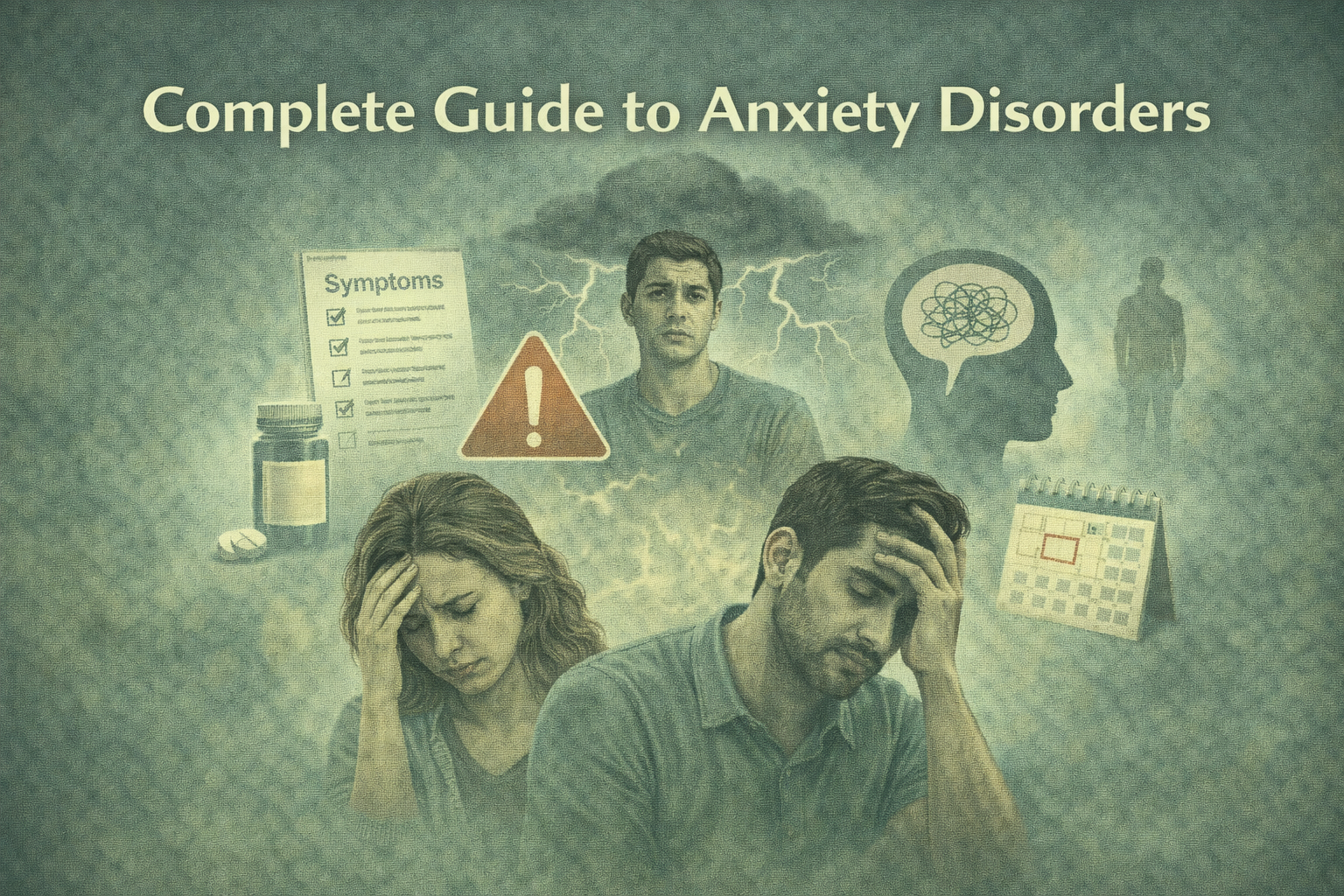
Anxiety disorders affect millions, yet many people suffer in silence, unsure if their worry is “normal” or something more. Did you know that an estimated 19.1% of U.S. adults experienced any anxiety disorder in the past year, with women affected at higher rates (23.4%) than men (14.3%)? (National Institute of Mental Health NIMH) Many describe feeling overwhelmed by constant worry that disrupts sleep, work, relationships, and daily joy.
These conditions go beyond everyday stress—they involve persistent, excessive fear or anxiety that interferes with life. You might experience racing thoughts, physical tension, or avoidance behaviors that make simple tasks feel impossible.
The good news? Anxiety disorders are highly treatable. This complete guide to anxiety disorders draws from NIMH, Anxiety and Depression Association of America (ADAA), Mayo Clinic, and DSM-5 standards to explain what they are, the main types, causes, symptoms, evidence-based treatments, natural management strategies, daily living tips, recovery insights, and more. By the end, you’ll have practical knowledge to recognize signs early, explore options, and take empowered steps toward relief.
What Are Anxiety Disorders? (Definition & Overview)
Anxiety disorders are a group of mental health conditions characterized by excessive, persistent fear or worry that interferes with daily functioning. Unlike normal anxiety—which is a temporary response to stress—these disorders are chronic, often disproportionate to the situation, and hard to control.
Understanding Anxiety Disorders Basics
At their core, anxiety disorders involve an overactive fear response. You might feel intense worry even when there’s no immediate danger, accompanied by physical symptoms like a rapid heartbeat, sweating, trembling, or shortness of breath. These reactions stem from the body’s “fight-or-flight” system staying activated too long, leading to exhaustion and avoidance behaviors.
Research shows these conditions often begin in childhood or adolescence but can emerge or worsen in adulthood due to life stressors.
Difference Between Anxiety and Anxiety Disorder
Normal anxiety is adaptive—it alerts you to threats and motivates action, like preparing for a job interview. It fades once the situation resolves.
In contrast, an anxiety disorder lasts six months or longer, feels uncontrollable, and impairs work, relationships, or daily activities. The key distinctions are intensity, duration, and impact—what might feel like “just stress” for one person can be debilitating for another.
Why Anxiety Disorders Develop
They arise from a mix of genetics, brain chemistry (imbalances in neurotransmitters like serotonin and GABA), and environmental factors (trauma, chronic stress). Twin studies suggest heritability, while life events often trigger onset.
Pro Tip: Track your worry patterns in a journal—note triggers, duration, and intensity. This simple habit helps distinguish normal stress from something needing professional attention.
Types of Anxiety Disorders Explained
Anxiety disorders include several distinct conditions, each with unique features but overlapping symptoms. Understanding the types helps identify what you’re experiencing and guides treatment.
Generalized Anxiety Disorder (GAD)
GAD involves chronic, excessive worry about everyday matters—like health, finances, or work—that’s hard to control. Symptoms of generalized anxiety disorder include restlessness, fatigue, difficulty concentrating, irritability, muscle tension, and sleep disturbances. It affects about 2.7% of U.S. adults annually (NIMH), with women twice as likely as men.
People with GAD often describe a constant “what if” loop, leading to physical exhaustion.
Guide to Social Anxiety Disorder
Also called social phobia, this features intense fear of social situations where you might be judged, embarrassed, or scrutinized. You may avoid conversations, public speaking, or eating in public, experiencing blushing, sweating, or trembling when unavoidable.
It affects around 7.1% of adults (ADAA), often starting in adolescence and impacting relationships and career growth.
Panic Disorder vs Anxiety Attacks Guide
Panic disorder involves recurrent, unexpected panic attacks—sudden surges of intense fear with symptoms like chest pain, heart palpitations, dizziness, or fear of dying. Attacks peak quickly but leave lingering worry about future episodes.
Unlike isolated anxiety attacks (which can occur in other disorders), panic disorder includes persistent fear of more attacks, leading to avoidance (e.g., not leaving home).
Other Common Types
- Specific phobias: Intense fear of objects/situations (e.g., heights, animals), affecting 9.1% of adults.
- Agoraphobia: Fear of places where escape feels difficult, often tied to panic.
- Separation anxiety disorder: Excessive fear of separation from attachment figures, more common in children but can persist.
What Causes Anxiety Disorders in Adults?
No single cause exists—it’s usually a combination of factors.
Biological and Genetic Factors
Family history increases risk; twin studies show moderate heritability. Neurotransmitter imbalances (e.g., low serotonin or GABA) and overactive amygdala (fear center) play roles.
Environmental and Life Triggers
Trauma, chronic stress, major changes (loss, job pressure), or adverse childhood experiences can trigger or worsen symptoms. Ongoing stressors amplify genetic vulnerabilities.
Anxiety Disorders in Women Complete Guide Insights
Women face higher prevalence (23.4% past-year vs. 14.3% in men, NIMH), linked to hormonal fluctuations (menstrual cycle, pregnancy, menopause), societal pressures, and trauma exposure.
Research Shows: A review highlights how estrogen modulates fear circuits, contributing to higher rates in women during hormonal shifts.
Signs and Symptoms of Anxiety Disorders
Symptoms vary but often blend emotional, physical, and behavioral signs.
Symptoms of Generalized Anxiety Disorder
Persistent worry, irritability, fatigue, trouble concentrating, sleep issues, and muscle tension dominate.
Signs of Severe Anxiety Disorder
Intense panic, extreme avoidance, physical exhaustion, depersonalization, or overlap with depression (hopelessness, low mood).
Physical vs. Emotional Symptoms
| Physical Symptoms | Emotional Symptoms |
| Heart palpitations, sweating | Excessive fear of losing control |
| Trembling, shortness of breath | Constant dread or impending doom |
| Nausea, dizziness | Irritability, feeling on edge |
How to Overcome Anxiety Disorders Naturally
Natural approaches complement professional care and may reduce mild-moderate symptoms.
Lifestyle Changes and Self-Help Strategies
Regular exercise (30 minutes most days) lowers cortisol; mindfulness meditation builds awareness; consistent sleep hygiene (7-9 hours) stabilizes mood.
Natural Remedies and Techniques
Deep breathing (e.g., 4-7-8 method: inhale 4, hold 7, exhale 8) activates relaxation; progressive muscle relaxation eases tension. Some find chamomile tea or limited herbal options helpful, but evidence varies—discuss with a doctor.
When to Seek Professional Help
If symptoms persist, interfere significantly, or include suicidal thoughts, natural methods alone aren’t enough.
Important: Supplements like kava or valerian may interact with medications—always consult a healthcare provider first.
Best Treatments for Anxiety Disorders
Evidence-based options offer strong relief, often in combination.
Cognitive Behavioral Therapy for Anxiety Guide
CBT is the gold standard, helping identify and challenge distorted thoughts while using exposure to reduce avoidance. Meta-analyses show moderate-large effects, with long-term benefits.
Medications and Combined Approaches
SSRIs/SNRIs (e.g., sertraline, venlafaxine) are first-line for many, balancing brain chemicals. Benzodiazepines offer short-term relief but risk dependence.
Other Evidence-Based Options
Acceptance and Commitment Therapy (ACT) focuses on values-based living; mindfulness-based therapies build present-moment awareness.
Expert Insight: “CBT empowers people to respond differently to anxiety triggers, leading to lasting change.” (Clinical psychologist perspective)
Living with Generalized Anxiety Disorder
Daily management turns challenges into manageable routines.
Daily Coping Strategies
Build routines: morning walks, journaling worries, connecting with support networks. Limit caffeine/alcohol, which can worsen symptoms.
Long-Term Management
Monitor triggers, practice relapse prevention (e.g., booster therapy sessions), and celebrate progress.
Anxiety Disorders Recovery Stories Guide
Recovery looks different for everyone, but stories inspire hope.
Real-Life Examples and Lessons
One person overcame GAD through CBT and exercise, learning to tolerate uncertainty. Another managed social anxiety via gradual exposure, rebuilding confidence.
Key takeaways: Persistence pays off; combining therapy with lifestyle changes works; setbacks are normal—progress isn’t linear.
Scientific Evidence & Research
Research backs effective management.
Clinical Studies
CBT reduces symptoms 50-70% in many trials (NIMH/Mayo Clinic). Recent network meta-analyses confirm CBT’s superiority for long-term GAD relief.
Expert Opinions
APA guidelines recommend SSRIs/SNRIs plus therapy as first-line.
Statistical Data
19.1% past-year prevalence (NIMH); higher in women.
NIMH Any Anxiety Disorder, Mayo Clinic Anxiety Treatments, ADAA Facts & Statistics.
Common Mistakes to Avoid
Mistake #1: Avoiding Triggers Completely
This reinforces fear—better: gradual exposure with guidance.
Mistake #2: Relying Only on Medication
Short-term relief; therapy addresses roots.
Mistake #3: Ignoring Professional Help
Self-management often falls short long-term—early intervention improves outcomes.
Frequently Asked Questions (FAQs)
What is the complete guide to anxiety disorders?
This is a comprehensive resource covering symptoms, types, causes, and treatments for anxiety disorders. It provides evidence-based info to help understand and manage these conditions effectively. Always pair with professional advice for personalized care.
What are the symptoms of generalized anxiety disorder?
Excessive worry, restlessness, fatigue, difficulty concentrating, irritability, muscle tension, and sleep issues. These persist most days for at least six months and cause distress or impairment.
How to overcome anxiety disorders naturally?
Lifestyle changes like regular exercise, mindfulness, and deep breathing help reduce symptoms. Combine with professional care for best results—natural approaches support but don’t replace therapy or medication when needed.
What are the best treatments for anxiety disorders?
CBT and SSRIs/SNRIs are evidence-based first-line options. Many benefit from combined approaches; consult a provider to tailor treatment.
What’s the difference between anxiety and anxiety disorder?
Normal anxiety is temporary and helpful; disorders are chronic, excessive, and impairing. Duration (6+ months) and impact distinguish them.
Can anxiety disorders affect women differently?
Yes, higher prevalence due to biological (hormonal) and societal factors. Women often experience more GAD and panic.
Is cognitive behavioral therapy effective for anxiety?
Yes, highly effective with long-term benefits—studies show significant symptom reduction for many.
Conclusion
Anxiety disorders are common but highly treatable—understanding types, spotting symptoms early, and pursuing evidence-based options like CBT can bring lasting relief and reclaim control.
This complete guide to anxiety disorders equips you with science-backed knowledge to move forward confidently. You now know the difference between normal worry and a disorder, plus practical ways to manage it.
Your next step: Track symptoms for a week or schedule a chat with a doctor or therapist. Small actions compound into big change.
Medical Disclaimer:
This article is for informational and educational purposes only and does not constitute medical advice. The information provided should not be used for diagnosing or treating a health problem or disease. Always consult with a qualified healthcare professional before making any changes to your mental health treatment, starting new medications, or trying new supplements.
If you’re experiencing a mental health crisis, please call the 988 Suicide & Crisis Lifeline or visit your nearest emergency room. For non-emergency support, contact the Substance Abuse and Mental Health Services Administration (SAMHSA) National Helpline at 1-800-662-HELP (4357).
The content in this article is based on current research and expert consensus as of 2026, but medical knowledge evolves. Always verify information with your healthcare provider.