Depression affects millions of people across the United States, with recent data showing that 11.4% of adults took prescription medication for depression in 2023, according to the CDC’s National Health Interview Survey. Women were more than twice as likely as men to use these medications (15.3% vs. 7.4%). If you’ve been feeling persistent sadness, loss of interest in activities, fatigue, or other symptoms that interfere with daily life, you may wonder if depression medication could help—and what the options look like.
Many people face uncertainty when considering treatment. They worry about side effects, how long it takes to work, or whether medication is the right choice compared to therapy or lifestyle changes. The trial-and-error process can feel frustrating, and myths about antidepressants being “happy pills” or causing inevitable weight gain add to the hesitation.
This comprehensive depression medication overview breaks down the essentials: how these medications work, the main types, factors for choosing one, potential side effects, evidence-based options, and emerging treatments as of 2026. You’ll gain clear, evidence-based information to support more confident conversations with your healthcare provider.
This article draws from reputable sources like the Mayo Clinic, NIH, Cleveland Clinic, and recent CDC and FDA updates to provide balanced, up-to-date insights.
For related reading, see our guide on Signs of Mental Health Issues: Ultimate Guide to Understanding Depression
What Is Depression Medication? A Complete Overview
Depression medication, often called antidepressants, refers to prescription drugs designed to help relieve symptoms of major depressive disorder and other forms of depression. These medications work by influencing brain chemicals involved in mood regulation.
How Antidepressants Work in the Brain
Antidepressants primarily target neurotransmitters—chemical messengers like serotonin, norepinephrine, and dopamine—that help regulate mood, energy, and motivation. In depression, imbalances or disruptions in these systems can contribute to symptoms.
These medications help restore better communication between brain cells, gradually improving mood and reducing other symptoms like low energy or hopelessness. Importantly, they are not instant “happy pills” but tools that support the brain’s natural recovery processes.
Most people notice initial changes within 1-2 weeks, but full benefits often take 2-6 weeks or longer. Patience during this period is key, as stopping too soon can prevent seeing the potential benefits.
Common Classes in Depression Medication Overview
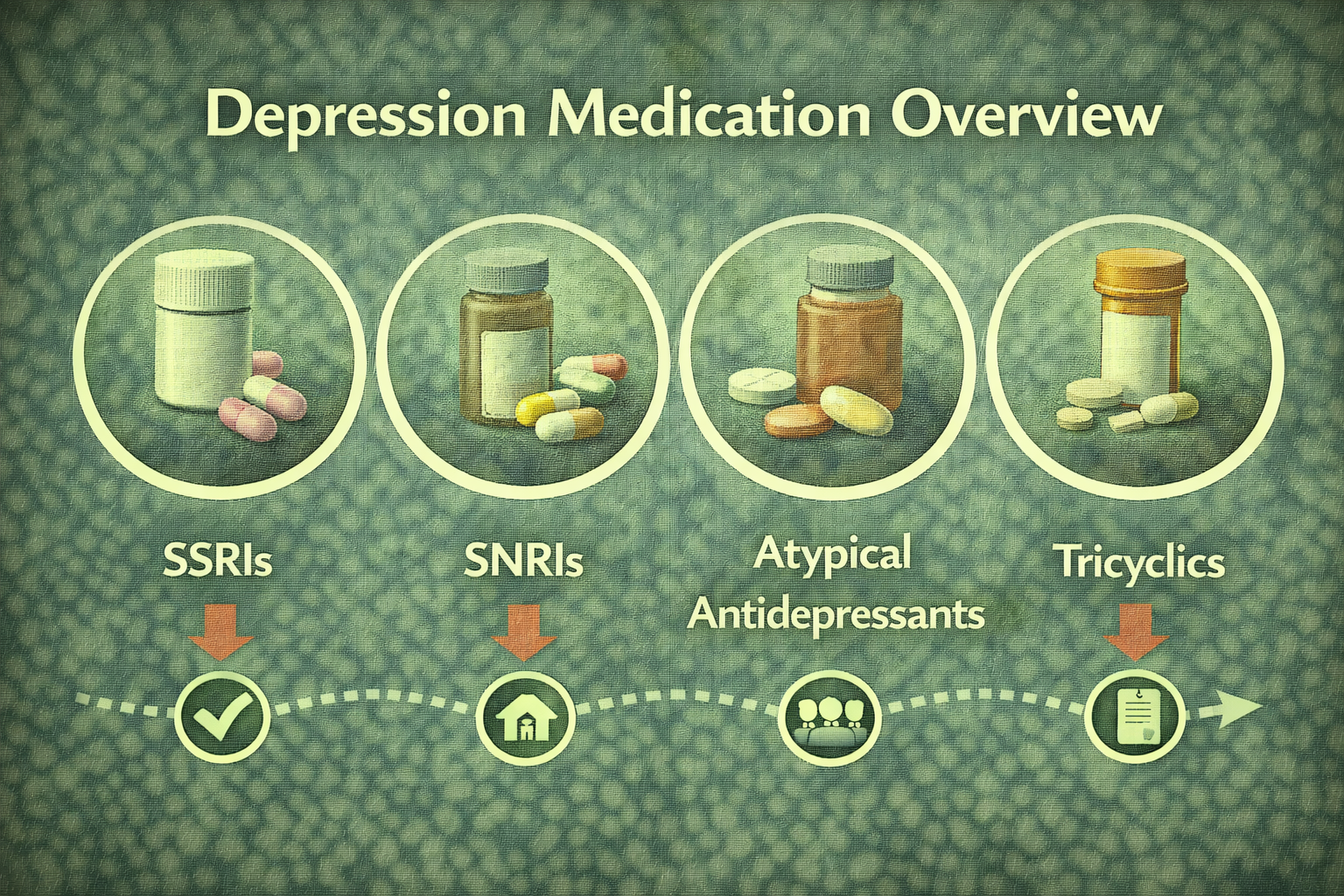
The main categories include:
- SSRIs (Selective Serotonin Reuptake Inhibitors): Often first-line due to good tolerability (e.g., sertraline/Zoloft, escitalopram/Lexapro).
- SNRIs (Serotonin-Norepinephrine Reuptake Inhibitors): Helpful for depression with pain or anxiety (e.g., duloxetine/Cymbalta, venlafaxine/Effexor).
- Atypical antidepressants: Diverse options like bupropion/Wellbutrin (energizing, fewer sexual side effects) or mirtazapine/Remeron (helps with sleep and appetite).
Other older classes, like tricyclics or MAOIs, are used less often due to more side effects but can help in specific cases.
Who Might Benefit from Depression Medication
These medications are typically recommended for moderate to severe depression, especially when symptoms persist despite lifestyle efforts or therapy alone. They can be particularly useful for treatment-resistant depression or when quick symptom relief is needed to support daily functioning.
Research suggests that combining medication with psychotherapy often yields the best outcomes for many people.
Pro Tip: Track your symptoms daily (mood, energy, sleep) in a simple journal or app during the first few weeks. This helps you and your doctor spot early improvements or needed adjustments.
Types of Depression Medication: Key Classes Explained
Understanding the main types helps demystify why one might suit you better than another.
SSRIs – The Most Common Antidepressants for Depression
SSRIs top the list for many because they effectively target serotonin with a relatively favorable side effect profile. Common ones include:
- Fluoxetine (Prozac)
- Sertraline (Zoloft)
- Escitalopram (Lexapro)
- Paroxetine (Paxil)
- Citalopram (Celexa)
They often serve as first-line treatment due to broad efficacy and lower risk of certain side effects compared to older drugs.
SNRIs vs SSRIs for Depression – Key Differences
SNRIs affect both serotonin and norepinephrine, which can provide extra benefits for physical symptoms like chronic pain or fatigue alongside mood issues.
Here’s a quick comparison:
- Efficacy: Similar overall for depression; SNRIs may edge out for mixed anxiety/pain cases.
- Side effects: SSRIs more linked to sexual dysfunction; SNRIs can cause more blood pressure changes or sweating.
- Examples: SNRIs like venlafaxine or duloxetine vs. SSRIs like sertraline.
Many start with an SSRI and switch or add if needed.
Atypical and Other Options in Depression Medication
Atypicals offer variety when standard options don’t fit. Bupropion stands out for being weight-neutral and having fewer sexual side effects—often chosen for depression medication without weight gain concerns. Mirtazapine helps with sleep and appetite but may cause drowsiness.
Older classes like tricyclics (e.g., amitriptyline) or MAOIs are reserved for cases where others fail, due to dietary restrictions and interactions.
Expert Insight: “The ‘best’ medication matches your symptoms, medical history, and side effect priorities—no one-size-fits-all exists,” notes consensus from clinical guidelines.
How to Choose Depression Medication That’s Right for You
Selecting the right option involves personalized discussion with your provider.
Factors to Consider When Selecting Medication
Key elements include your specific symptoms (e.g., low energy vs. anxiety), past responses, other health conditions, and potential side effects. For instance, bupropion might suit someone concerned about weight or sexual function.
Age, pregnancy plans, and concurrent medications also guide choices.
Depression Medication for Elderly and Special Groups
In older adults, providers often start with lower doses to minimize risks like falls, confusion, or drug interactions. Careful monitoring is essential.
Special considerations apply for pregnancy, breastfeeding, or co-occurring conditions.
Working with Your Doctor – Questions to Ask
Prepare questions like:
- What side effects should I watch for?
- How long until it might help?
- What if it doesn’t work—next steps?
- How will we monitor progress?
Regular follow-ups allow adjustments.
If you’re ready to explore professional support, consider connecting with a licensed provider through trusted telehealth options.
Important: Never start, stop, or change doses without medical guidance—sudden changes can cause issues.
For accompanying reading, please refer to our Adviser on ‘Signs of Mental Health Issues:’ Types of Depression Explained
Side Effects of Depression Drugs – What to Expect
All medications carry potential side effects, but many improve over time or with tweaks.
Common Side Effects and Prevalence
Frequent ones include nausea, headache, dry mouth, sexual dysfunction, and weight changes. Studies show 20-30% experience notable sexual issues or weight gain, though rates vary by drug (higher with some SSRIs/SNRIs; lower with bupropion).
Most side effects peak early and lessen.
Depression Medication and Alcohol – Risks
Alcohol can worsen sedation, dizziness, and depression itself while reducing medication effectiveness. Many experts advise limiting or avoiding it.
Stopping Depression Medication Side Effects
Abrupt stopping risks withdrawal symptoms like dizziness, irritability, or “brain zaps.” Gradual tapering under supervision minimizes this.
Research Shows: Clinical data indicate that guided tapering significantly reduces discontinuation issues.
Best Medication for Major Depression – Evidence-Based Options
No single “best” exists, but guidelines highlight strong performers.
Top Recommendations in 2025-2026
Escitalopram and sertraline frequently rank high for efficacy and tolerability in major depression. Other strong options include venlafaxine or mirtazapine based on individual needs.
Guidelines from sources like the American College of Physicians support second-generation antidepressants as first-line.
Generic Depression Medications List
Most popular antidepressants have affordable generics (e.g., generic sertraline, escitalopram, bupropion). They offer the same active ingredients and bioequivalence at lower cost.
Discuss generics with your doctor or pharmacist.
For accompanying reading, please refer to our Adviser on ‘Signs of Mental Health Issues:’Depression First Steps Guide
New Depression Medications 2026 – Emerging Treatments
Innovation continues, with options for faster relief or better tolerability.
Recent FDA Approvals and Pipeline
Lumateperone (Caplyta) gained approval in late 2025 as an adjunctive treatment for major depressive disorder, offering benefits with a favorable metabolic profile.
Other developments include refinements to rapid-acting agents like esketamine for treatment-resistant cases and exploration of at-home brain stimulation devices.
Zuranolone remains established for postpartum depression but not broadly for major depression.
Research Shows: Emerging adjunctive therapies aim to boost response in partial responders.
Scientific Evidence & Research
Antidepressants rest on solid evidence.
Clinical Studies
Meta-analyses show antidepressants outperform placebo, with 50-60% response rates and 30-40% remission in acute treatment. Combined with therapy, outcomes improve further.
Expert Opinions
Guidelines consistently recommend SSRIs/SNRIs as first-line for most adults, per Mayo Clinic and similar authorities.
Statistical Data
About 11.4% of U.S. adults used antidepressants in 2023 (CDC), with higher rates among women and those with disabilities.
Common Mistakes to Avoid
Avoiding pitfalls improves success.
Mistake #1: Stopping Abruptly
Sudden discontinuation risks withdrawal and symptom return. Better: Work with your doctor on a tapering plan.
Mistake #2: Ignoring Side Effects
Not reporting issues leads to unnecessary discomfort or non-adherence. Better: Communicate openly—adjustments often help.
Mistake #3: Expecting Instant Results
Full effects take weeks. Better: Combine with therapy and track progress patiently.
Important: If symptoms worsen or suicidal thoughts emerge, seek immediate help—call 988.
Frequently Asked Questions (FAQs)
What are the main types of depression medication?
The primary classes are SSRIs, SNRIs, and atypical antidepressants. SSRIs like sertraline or escitalopram are often the first choice due to their safety profile and effectiveness for many people. Your provider selects based on your symptoms and history.
What is the best medication for major depression?
There is no universal best medication—it depends on individual factors like symptoms and side effect tolerance. However, escitalopram and sertraline are frequently recommended as evidence-based starting options due to strong efficacy and tolerability in studies.
What are common side effects of depression drugs?
Common ones include nausea, sexual dysfunction, weight changes, and fatigue. Many improve within weeks or with dose adjustments; report persistent issues to your provider for potential switches.
Are there over the counter depression medicine options?
No true over-the-counter antidepressants exist with strong evidence. Supplements like St. John’s Wort have limited support and risks of interactions—always consult a professional before trying them.
Can you drink alcohol with depression medication?
It’s generally best to avoid or limit alcohol, as it can increase side effects like drowsiness and impair medication effectiveness while worsening depression symptoms.
What are new depression medications in 2026?
Advances include lumateperone as an adjunctive option for major depression and continued refinement of rapid-acting treatments for resistant cases. Discuss emerging options with your provider.
How do I choose depression medication safely?
Consult a healthcare provider to review your symptoms, history, and preferences. They consider evidence-based guidelines and monitor closely for effectiveness and side effects.
Conclusion
Depression medication, when appropriately selected, can significantly reduce symptoms for most people, restoring energy, motivation, and joy to daily life. Options exist to address concerns like weight gain or sexual side effects, and emerging treatments continue to improve outcomes.
This depression medication overview empowers you to approach treatment discussions knowledgeably and advocate for what fits your needs.
Your next step? Schedule an appointment with a healthcare professional to discuss your symptoms openly—they can guide personalized recommendations. If you’re ready for support, explore therapy resources or connect with a provider.
Recovery is possible, and taking that first step shows real strength. You’re not alone, and effective help is within reach.
Medical Disclaimer:
This article is for informational and educational purposes only and does not constitute medical advice. The information provided should not be used for diagnosing or treating a health problem or disease. Always consult with a qualified healthcare professional before making any changes to your mental health treatment, starting new medications, or trying new supplements.
If you’re experiencing a mental health crisis, please call the 988 Suicide & Crisis Lifeline or visit your nearest emergency room. For non-emergency support, contact the Substance Abuse and Mental Health Services Administration (SAMHSA) National Helpline at 1-800-662-4357.
The content in this article is based on current research and expert consensus as of 2026, but medical knowledge evolves. Always verify information with your healthcare provider.