Nearly 11% of U.S. adults experience at least one panic attack each year. Imagine your heart suddenly racing, your chest tightening, and an overwhelming sense that something catastrophic is happening — even though you’re safe. For millions, this terrifying episode strikes without warning, leaving them confused, embarrassed, and desperate for answers.
If you’ve ever wondered “Why is this happening to me?” you’re not alone. Many people suffer recurring panic attacks without understanding the true causes or risk factors. This lack of knowledge often leads to avoidance behaviors, increased isolation, and worsening anxiety that disrupts work, relationships, and daily life.
In this comprehensive, doctor-backed guide, you’ll learn exactly what causes panic attacks — from biological mechanisms and psychological triggers to medical conditions and lifestyle factors. You’ll also discover the key risk factors healthcare professionals want you to recognize early. By the end, you’ll have clear, actionable insights to help you understand your symptoms and take the first steps toward lasting relief.
For a broader foundation, see our guide on Signs of Mental Health Issues: The Ultimate Guide to Panic Attacks: Causes, Symptoms & How to Overcome Them for Good (2026)
What Are Panic Attacks? Definition, Symptoms, and Overview
A panic attack is a sudden episode of intense fear or discomfort that reaches a peak within minutes. It triggers a powerful physical and emotional response even when no real danger exists.
Core Symptoms According to DSM-5
The DSM-5 recognizes a panic attack when four or more of the following symptoms develop abruptly and peak within 10 minutes:
- Heart palpitations, pounding heart, or accelerated heart rate
- Sweating, trembling, or shaking
- Shortness of breath or feelings of smothering
- Chest pain or discomfort
- Dizziness, lightheadedness, or feeling faint
- Fear of losing control, “going crazy,” or dying
These symptoms feel life-threatening, which is why many people first seek emergency care believing they are having a heart attack.
Panic Attacks vs. Panic Disorder
Not everyone who has a panic attack develops panic disorder. Isolated panic attacks are common, but panic disorder involves recurrent unexpected attacks plus at least one month of persistent worry about having another attack or significant behavior changes to avoid them.
According to NIMH data, an estimated 2.7% of U.S. adults had panic disorder in the past year, with women affected at nearly twice the rate of men (3.8% vs. 1.6%).
How Long Do They Last and Why It Matters
Most panic attacks peak within 10 minutes and resolve within 20–30 minutes. However, the fear of future attacks can last much longer and significantly impact quality of life. Understanding this timeline helps reduce the secondary anxiety that often fuels the cycle.
What Causes Panic Attacks? Biological and Psychological Mechanisms
What causes panic attacks at the most fundamental level is a false alarm in the brain’s fear response system. Your body activates its fight-or-flight response as if facing immediate danger, even when none exists.
The Brain’s Fear Circuitry
The amygdala — the brain’s alarm center — plays a central role. In people prone to panic attacks, the amygdala becomes hyper-reactive, sending exaggerated danger signals. This leads to rapid activation of the sympathetic nervous system and the release of stress hormones.
Neurotransmitter Imbalances
Imbalances in key brain chemicals contribute significantly:
- Reduced GABA (the calming neurotransmitter)
- Dysregulated serotonin and norepinephrine
These chemical shifts make the nervous system more excitable and prone to sudden surges.
Genetic Predisposition
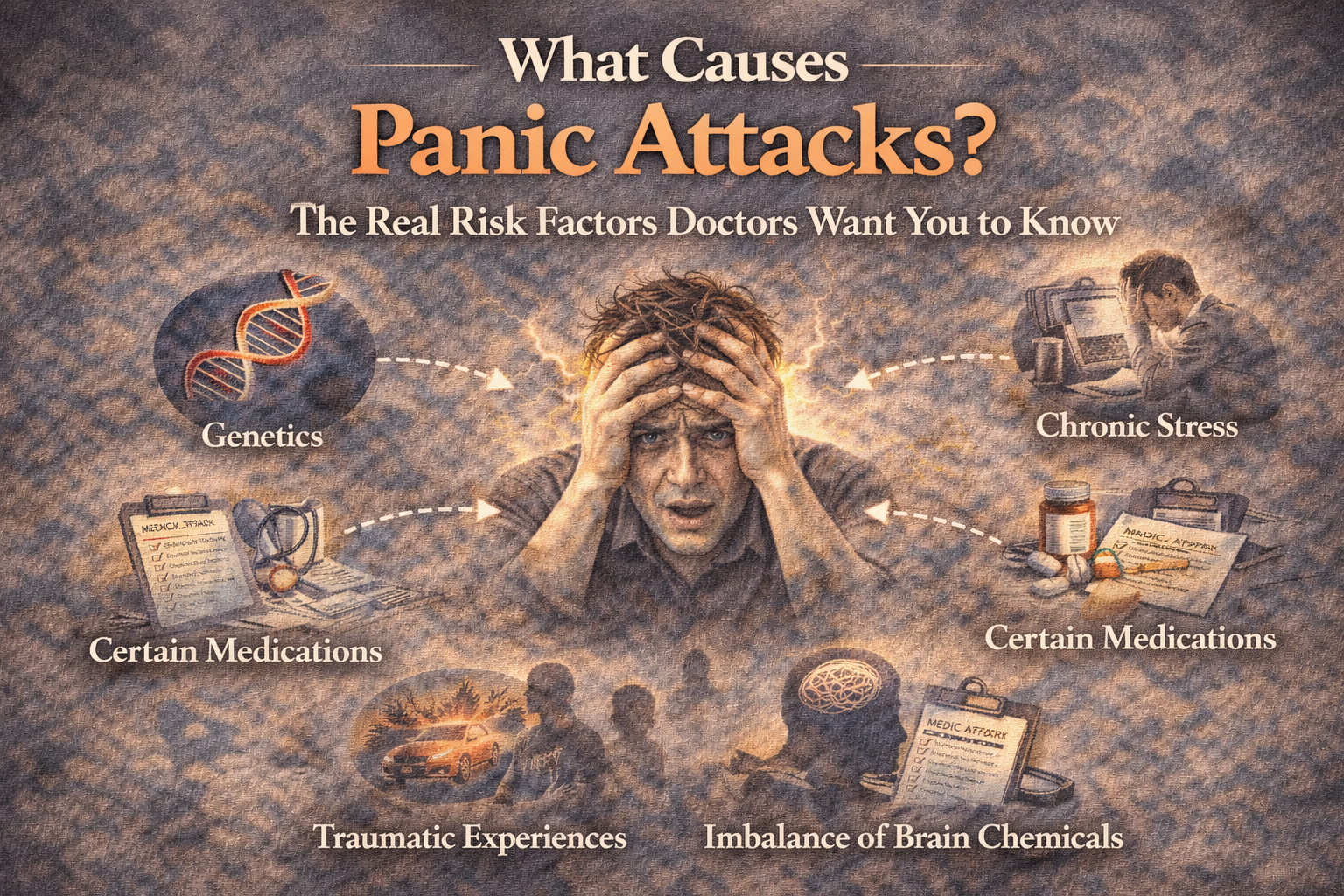
Genetics account for roughly 30–40% of the risk. Twin studies show higher concordance rates in identical twins, and first-degree relatives of someone with panic disorder face significantly elevated risk.
| Factor | Brain Chemistry Role | Fear Response Effect |
| Amygdala hyperactivity | Over-sensitivity to internal cues | False “danger” signals |
| GABA/serotonin imbalance | Reduced natural calming | Heightened arousal and panic |
| Genetic factors | Inherited vulnerability | 30–40% heritability |
.
Real Risk Factors for Panic Attacks Doctors Want You to Know
Understanding your personal risk profile is one of the most empowering steps you can take.
Genetic and Family History
Mayo Clinic experts identify family history as the strongest predictor. If a close relative has had panic attacks or panic disorder, your risk increases substantially.
Gender and Age Factors
Women are approximately twice as likely as men to develop panic disorder. Symptoms most commonly begin in late adolescence or early adulthood (late teens to early 30s), though they can appear at any age.
Trauma and Major Life Stress
Childhood adversity, sexual assault, serious accidents, or major life transitions (divorce, job loss, bereavement) significantly raise risk. Chronic stress builds vulnerability over time.
For a broader foundation, see our guide on Signs of Mental Health Issues: 15 Panic Attacks Warning Signs You Should Never Ignore — Expert-Backed Checklist
What Triggers a Panic Attack? Common Everyday Factors
What triggers a panic attack often involves a mix of internal sensations and external situations that the brain misinterprets as threats.
Environmental and Situational Triggers
Common examples include crowded places, driving (especially on highways or bridges), public speaking, or enclosed spaces. These situations can spark the initial physical sensation that cascades into a full attack.
Lifestyle Triggers
Lack of sleep, intense physical exertion without proper conditioning, alcohol withdrawal, and even certain medications can lower the threshold for attacks.
For daily strategies that reduce these triggers, explore our article 10 Daily Habits That Reduce Anxiety Triggers.
Can Stress Cause Panic Attacks? The Powerful Mind-Body Connection
Yes — stress is one of the most common and powerful contributors to what causes panic attacks.
How Chronic Stress Primes the Nervous System
Prolonged stress dysregulates the HPA axis (hypothalamic-pituitary-adrenal), leading to elevated cortisol levels. This keeps the nervous system in a heightened state of alert, making it easier for minor sensations to trigger a full panic response.
Panic Attacks Caused by Stress in Daily Life
Work deadlines, financial pressures, relationship conflicts, and caregiving responsibilities frequently precede attacks. The body’s stress response becomes so sensitized that even neutral situations can spark an episode.
Pro Tip: Many people notice fewer attacks when they build in short daily “stress resets” — even 5 minutes of diaphragmatic breathing can lower cortisol reactivity.
Medical Causes of Panic Attacks: When Your Body Signals Alarm
Sometimes what causes panic attacks is an underlying physical condition that mimics or provokes the fight-or-flight response.
Thyroid, Heart, and Respiratory Conditions
Hyperthyroidism, cardiac arrhythmias, asthma, and COPD can produce symptoms nearly identical to panic attacks. Ruling these out is essential.
Substance-Related Medical Triggers
Caffeine, nicotine, certain asthma medications, and withdrawal from alcohol or sedatives are well-documented triggers.
Important: If you experience chest pain, shortness of breath, or dizziness for the first time, seek immediate medical evaluation to rule out serious cardiac or respiratory issues.
External link: Mayo Clinic Symptom Checker
Hormonal Causes of Panic Attacks: Gender and Life Stage Insights
Hormonal fluctuations provide another important piece of the puzzle, especially for women.
Menstrual Cycle, Pregnancy, and Menopause
Estrogen and progesterone shifts — particularly in the premenstrual phase, during pregnancy, or perimenopause — can increase sensitivity to panic triggers in susceptible individuals.
Thyroid and Adrenal Hormones
Overactive or underactive thyroid conditions frequently co-occur with panic symptoms. Adrenal imbalances can also heighten arousal.
[Image: Hormonal cycle infographic showing life stages – alt text: “hormonal causes of panic attacks in women”]
Why Do I Have Panic Attacks? Evaluating Your Personal Risk Profile
If you’re asking “why do I have panic attacks,” a quick self-assessment can provide clarity and direction.
Quick Risk Self-Assessment
Consider these factors:
- Strong family history of anxiety or panic
- Recent major life stressors or trauma
- High daily caffeine intake (>400 mg)
- History of smoking or irregular sleep
- Female gender and age 18–35
Scientific Evidence and Research on Panic Attack Causes
Clinical Studies
The landmark NIMH National Comorbidity Survey Replication (NCS-R) established lifetime prevalence at 4.7% for panic disorder. Twin studies consistently show 30–40% heritability. Recent fMRI research (2023–2025) confirms amygdala hyper-reactivity during threat processing in individuals with panic disorder.
Expert Opinions
“Panic attacks represent a false alarm in the brain’s fear system,” notes the National Institute of Mental Health. Healthcare professionals emphasize that understanding this mechanism reduces shame and encourages effective treatment.
Statistical Data
- Past-year panic disorder: 2.7% of U.S. adults (NIMH)
- Women: 3.8% vs. men: 1.6%
- Strong familial clustering documented across multiple large-scale studies
External links:
Common Mistakes to Avoid When Dealing with Panic Attacks
Mistake #1: Ignoring or Self-Diagnosing Symptoms
Why it’s problematic: You may miss treatable medical conditions.
Better approach: See your primary care doctor first to rule out physical causes.
Mistake #2: Avoiding All Triggers Completely
Why it’s problematic: Avoidance strengthens fear over time.
Better approach: Work with a therapist on gradual, supported exposure.
Mistake #3: Relying Only on Medication Without Therapy
Why it’s problematic: Medication addresses symptoms but not root patterns.
Frequently Asked Questions (FAQs)
What causes panic attacks?
Panic attacks are caused by a sudden overactivation of the body’s fight-or-flight response due to a combination of genetic, biological, psychological, and environmental factors. Doctors highlight neurotransmitter imbalances and amygdala hypersensitivity as core mechanisms. While the exact trigger varies, the brain essentially sounds a false alarm. Identifying personal risk factors helps break the cycle.
What are the risk factors for panic attacks?
Key risk factors include family history, female gender, major life stress or trauma, smoking, and excessive caffeine intake. First-degree relatives face significantly elevated risk. Onset most commonly occurs in late teens to early 30s. Understanding these factors allows for earlier intervention and better management.
Can stress cause panic attacks?
Yes — both acute and chronic stress are among the most common triggers. Chronic stress dysregulates the HPA axis and elevates cortisol, making the nervous system more reactive. Many people first experience attacks during periods of high work, financial, or relationship pressure.
Does caffeine cause panic attacks?
Caffeine can trigger or worsen panic attacks in sensitive individuals by increasing heart rate, stimulating adrenaline, and mimicking physical symptoms. Those with existing anxiety often benefit from limiting intake to under 200 mg daily (about two cups of coffee).
What triggers a panic attack suddenly?
Sudden triggers frequently include unexpected bodily sensations (a skipped heartbeat, dizziness), hormonal shifts, crowded environments, or internal misinterpretation of normal stress signals. The brain then escalates these sensations into a full fight-or-flight response within minutes.
Why do I have panic attacks in adults?
In adults, panic attacks often result from accumulated stress, unresolved trauma, emerging medical conditions, or genetic vulnerability that surfaces during life transitions such as career changes, parenthood, or menopause. The good news is that targeted treatment produces excellent results at any age.
Conclusion
Understanding what causes panic attacks and recognizing the real risk factors gives you powerful knowledge that can break the fear cycle. You now know the biological false-alarm mechanism, the influence of stress and hormones, the importance of ruling out medical causes, and the role genetics and lifestyle play.
The transformation begins when you stop fearing the unknown and start addressing root contributors with evidence-based strategies. Many people experience dramatic improvement within weeks of starting proper treatment.
Your next action step: Track your episodes for one week using a simple journal or our free Panic Risk Tracker. Note triggers, symptoms, and what helped you calm down. Share this information with a healthcare provider.
If panic attacks are interfering with your life, reach out to a licensed therapist or psychiatrist today. Early intervention truly makes a profound difference.
You are not alone, and recovery is absolutely possible. With the right understanding and support, you can regain control and live with greater calm and confidence.
Medical Disclaimer:
This article is for informational and educational purposes only and does not constitute medical advice. The information provided should not be used for diagnosing or treating a health problem or disease. Always consult with a qualified healthcare professional before making any changes to your mental health treatment, starting new medications, or trying new supplements.
If you’re experiencing a mental health crisis, please call or text the 988 Suicide & Crisis Lifeline or visit your nearest emergency room. For non-emergency support, contact the Substance Abuse and Mental Health Services Administration (SAMHSA) National Helpline at 1-800-662-4357.
The content in this article is based on current research and expert consensus as of 2026, but medical knowledge evolves. Always verify information with your healthcare provider.