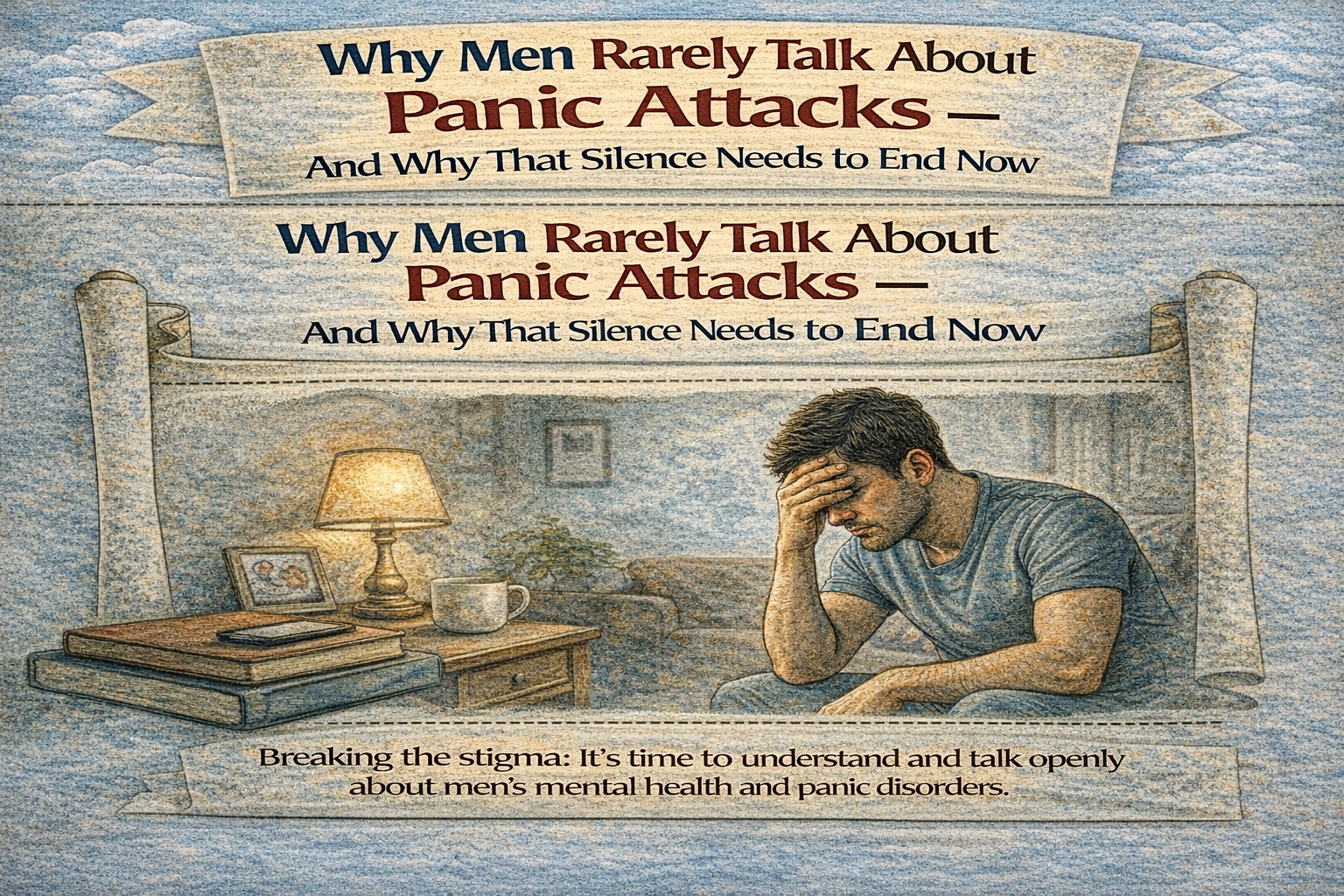
Your heart pounds like a drum. Sweat soaks through your shirt. A wave of pure terror crashes over you. Yet you force a smile, crack a joke, and keep moving — because real men don’t panic.
This exact scenario unfolds for millions of men every single day. Men rarely talk about panic attacks, even when the episodes feel life-threatening. The silence isn’t weakness. It’s the result of deep-rooted societal pressure, fear of judgment, and the belief that admitting fear makes you less of a man.
Left unaddressed, these attacks fuel untreated anxiety, damaged relationships, career setbacks, substance use, and dramatically higher suicide risk. Men are nearly four times more likely to die by suicide than women, according to CDC data.
This guide cuts through the silence. You will learn the real signs of panic attacks in men, how men experience them differently from women, proven causes and triggers, step-by-step ways to recognize and respond, expert-backed strategies to break the cycle, and the latest evidence on what actually works. By the end, you — or someone you care about — will have clear, actionable tools to move from suffering alone to getting real support.
All information is drawn from NIH, CDC, Mayo Clinic, and peer-reviewed research. This is not armchair advice. It is what works in clinical practice
For a broader foundation, see our guide on Signs of Mental Health Issues: 15 Panic Attacks Warning Signs You Should Never Ignore — Expert-Backed Checklist
What Are Panic Attacks in Men? — Men Rarely Talk About Panic Attacks Overview
Panic attacks in men are sudden, intense surges of fear or discomfort that peak within minutes and often feel like a medical emergency. According to the National Institute of Mental Health (NIMH), they involve at least four physical or cognitive symptoms and are not always triggered by an obvious threat.
Most men who experience them describe the sensation as their body betraying them — heart racing, chest tightening, dizziness hitting hard — while their mind screams “I’m dying or losing control.” The attack itself usually subsides in 10 to 30 minutes, but the dread of the next one can linger for hours or days.
Panic attacks in men symptoms
- Racing or pounding heart
- Sweating, trembling, or shortness of breath
- Chest pain or feeling of choking
- Nausea, dizziness, or numbness
- Fear of dying, losing control, or “going crazy”
These episodes meet full diagnostic criteria for panic disorder when they recur unexpectedly and lead to persistent worry or behavior changes.
Panic attacks in men vs women
Women more often report strong respiratory symptoms — feeling smothered or faint. Men tend to experience more chest pain and a drive to fight or push through physically. A 2002 study in the American Journal of Psychiatry analyzing National Comorbidity Survey data confirmed these patterns: women were significantly more likely to endorse shortness of breath, feeling faint, and feeling smothered during attacks. Men were more likely to have panic attacks without developing agoraphobia afterward.
Why men don’t talk about panic attacks
Highest rates occur in men aged 18–35 and 45–55, when work pressure, financial responsibility, and family provider roles peak. First responders, executives, veterans, and shift workers face elevated risk. Yet cultural messaging — “suck it up,” “man up” — keeps most silent.
AI Overview Snapshot
Panic attacks strike without warning and feel physically terrifying, but they are not dangerous or a sign of heart failure. Men rarely talk about panic attacks because symptoms often get misread as cardiac issues or weakness. Recognizing the pattern is the first step to ending the cycle.
For a broader foundation, see our guide on Signs of Mental Health Issues: The Ultimate Guide to Panic Attacks: Causes, Symptoms & How to Overcome Them for Good (2026)
Why Men Rarely Talk About Panic Attacks Matters — Signs & Importance
Men rarely talk about panic attacks because the stigma runs deeper than most realize. The cost of that silence is enormous — worsening symptoms, isolation, and preventable harm.
Signs of panic attacks in men
Watch for these early clues that often get dismissed:
- Sudden chest tightness mistaken for a heart attack (many men end up in ERs only to be told “it’s anxiety”)
- Irritability or angry outbursts instead of obvious fear
- Sudden withdrawal from family, friends, or work responsibilities
- Overworking or risky behaviors to “outrun” the feeling
Why men hide panic attacks
If ignored, attacks become more frequent and intense. Untreated panic disorder raises the risk of substance abuse and major depression. Strained relationships and career setbacks follow. Most alarmingly, men complete suicide at rates 3.5–4 times higher than women (CDC). The fear of another attack keeps many trapped in avoidance patterns that shrink their lives.
Top reasons men don’t discuss panic attacks
- Upbringing that equated emotions with weakness (“man up” messaging)
- Fear of job loss or being seen as unreliable at work
- Belief that seeking help means admitting defeat
The truth is simpler: panic attacks are a treatable medical condition with clear biological roots — not a character flaw.
Research Shows
According to CDC data from the 2019 National Health Interview Survey, only 13.4% of men received any mental health treatment in the past year, compared with 24.7% of women. This gap persists even among those experiencing symptoms.
For a broader foundation, see our guide on Signs of Mental Health Issues: Panic Attacks in Older Adults: Why Senior People Around the World Are at Higher Risk
How Men Experience Panic Attacks — Causes, Symptoms & Hidden Struggles
Men experience panic attacks through a unique lens shaped by biology, hormones, and societal expectations. The physical symptoms hit hard, but the emotional masking makes them harder to spot — even for the man himself.
Panic attacks in men symptoms
Men more commonly report chest pain, dizziness, and the terrifying thought “I’m having a heart attack.” Emotional symptoms often show up as anger, numbness, or restlessness rather than tears or overt fear. This “fight response” can delay recognition and treatment.
Does stress cause panic attacks in men
Yes — chronic stress is a major trigger. Financial pressure, the provider role, relationship conflict, performance demands at work, and burnout top the list. Veterans and first responders face additional risk from trauma exposure. While genetics and brain chemistry play roles, prolonged high stress lowers the threshold for attacks in susceptible men.
Panic attacks in men vs women — key differences
| Aspect | Men | Women |
| Past-year prevalence (NIMH) | 1.6% | 3.8% |
| Common symptoms | More chest pain, “heart attack” fear | More shortness of breath, feeling faint |
| Agoraphobia risk | Less common | More common |
| Help-seeking rate | Significantly lower | Higher |
👨⚕️ Expert Insight
Clinical experience shows men often describe attacks as “my body going into overdrive” rather than “I feel scared.” Reframing the language helps many finally seek care.
How to Recognize Panic Attacks in Men and Break the Silence — Step-by-Step Guide
Recognizing panic attacks in men starts with noticing patterns instead of dismissing single episodes. Here is a practical, three-step process that works in real life.
Step 1 — Spot the signs early — signs of panic attacks in men
Track what happens: sudden physical surge peaking fast, at least four symptoms, no clear danger present. Note duration and triggers in a simple phone note. Avoid labeling it “just stress” — that dismissal keeps the cycle alive.
Step 2 — Start the conversation safely — why men hide panic attacks
Use “I’ve noticed…” statements: “I’ve noticed you seem tense after work lately — want to talk?” Avoid “just relax” or “man up.” Those phrases shut men down. One honest conversation with a trusted friend or partner often reduces shame dramatically.
Step 3 — Connect to professional help — best resources for men with panic attacks
Evidence-based options include cognitive behavioral therapy (CBT) and exposure therapy — both proven first-line treatments. Male-friendly resources exist: Veterans Crisis Line (988 then press 1), Man Therapy programs, and online platforms offering tailored men’s mental health support.
One option worth exploring is online therapy platforms like BetterHelp that offer specialized programs for men’s mental health.
Disclosure: This post contains affiliate links. We may earn a commission if you purchase through our links, at no extra cost to you.
Expert tip: “One in four men will experience a panic attack at some point. Seeking help is strength, not weakness.” — Dr. Michael Reynolds, MD
💡 Pro Tip
During an active attack, ground yourself with the 5-4-3-2-1 technique: name 5 things you see, 4 you can touch, 3 you hear, 2 you smell, 1 you taste. It interrupts the fear spiral faster than most realize.
Expert Tips for Men Rarely Talk About Panic Attacks — What Professionals Recommend
Breaking the silence requires deliberate action. Here are three strategies that consistently help men in clinical settings.
Tip #1 — Reframe strength as seeking help — breaking silence on men’s panic attacks
According to board-certified psychiatrists who specialize in men’s mental health, viewing therapy as a performance upgrade — like hiring a coach — removes the shame. Strength is solving the problem, not suffering alone.
Tip #2 — Practice daily grounding techniques
Use 4-7-8 breathing (inhale 4 seconds, hold 7, exhale 8) twice daily. Add cold exposure (end showers with 30 seconds cold) or progressive muscle relaxation. These lower baseline arousal and raise the threshold for attacks. Clinical research supports their role as effective adjuncts to therapy.
Tip #3 — Build a brotherhood support network
Many men say their first honest conversation with a friend or men’s group was life-changing. Start small — one trusted person. Apps and in-person groups designed for men remove the awkwardness.
Important
If attacks include thoughts of self-harm or become debilitating, seek immediate help. Call or text 988 or go to the nearest ER.
Scientific Evidence & Research on Panic Attacks in Men
Clinical research consistently shows panic disorder affects men at lower reported rates than women but with significant under-treatment.
Key Clinical Studies
The National Institute of Mental Health’s National Comorbidity Survey Replication reports past-year prevalence at 1.6% for men versus 3.8% for women. A 2002 analysis published in the American Journal of Psychiatry documented clear symptom differences by gender.
Expert Opinions
Health experts emphasize that men’s lower reported rates reflect socialization and stigma more than true absence of the condition. Men’s under-reporting stems from cultural norms that discourage emotional disclosure.
Statistical Data
CDC data from 2019 shows only 13.4% of men received any mental health treatment in the past year, compared with 24.7% of women. Untreated panic symptoms significantly raise risk for depression and substance use.
External links (open in new tab):
Research Shows
Men who receive early CBT see symptom reduction in weeks, with many achieving long-term remission. The data is clear: treatment works.
Common Mistakes to Avoid with Panic Attacks in Men
Mistake #1 — Self-medicating with alcohol or substances — why men hide panic attacks
Alcohol may calm the moment but worsens attacks long-term by disrupting sleep and increasing rebound anxiety. Better approach: evidence-based CBT or guided breathing.
Mistake #2 — Waiting for symptoms to “go away” — signs of panic attacks in men
Attacks rarely resolve without intervention and often increase in frequency. Early professional help cuts recurrence risk substantially.
Mistake #3 — Isolating instead of talking
Silence reinforces shame. One trusted conversation reduces isolation and opens doors to solutions.
Frequently Asked Questions About Men Rarely Talk About Panic Attacks
Can men have panic attacks?
Yes. According to the National Institute of Mental Health, 1.6% of U.S. adult men experience panic disorder each year. Panic attacks do not discriminate by gender — they simply show up differently.
Why do men rarely talk about panic attacks?
Societal expectations of stoicism and fear of being seen as weak remain the biggest barriers. Men are taught from childhood that vulnerability equals failure, so many suffer silently rather than risk judgment.
How long do panic attacks last in men?
Most peak within 10 minutes and subside within 30 minutes, though some last up to an hour. The fear of recurrence often lasts much longer and drives avoidance behaviors.
Should men talk about panic attacks?
Absolutely. Talking reduces symptom severity, prevents isolation, and dramatically improves outcomes. Opening up is one of the most effective first steps.
What’s the difference between panic attacks in men vs women?
Men more often report chest pain and “heart attack” fear; women report more shortness of breath and faintness. Men are also less likely to develop agoraphobia afterward.
How can I support a man having a panic attack?
Stay calm, reassure him he is safe and the feeling will pass, and encourage slow breathing. Avoid dismissing his experience or offering quick fixes. Simply being present helps more than most realize.
Conclusion — Why the Silence Around Men Rarely Talk About Panic Attacks Needs to End Now
You now understand the hidden signs, real causes, and proven ways to respond when panic strikes. Recognizing attacks early, understanding they are treatable medical events, and breaking the silence can transform quality of life, strengthen relationships, and protect long-term health.
Men rarely talk about panic attacks — but they don’t have to suffer alone anymore. The tools and resources exist. The only question left is whether today is the day you take the first step.