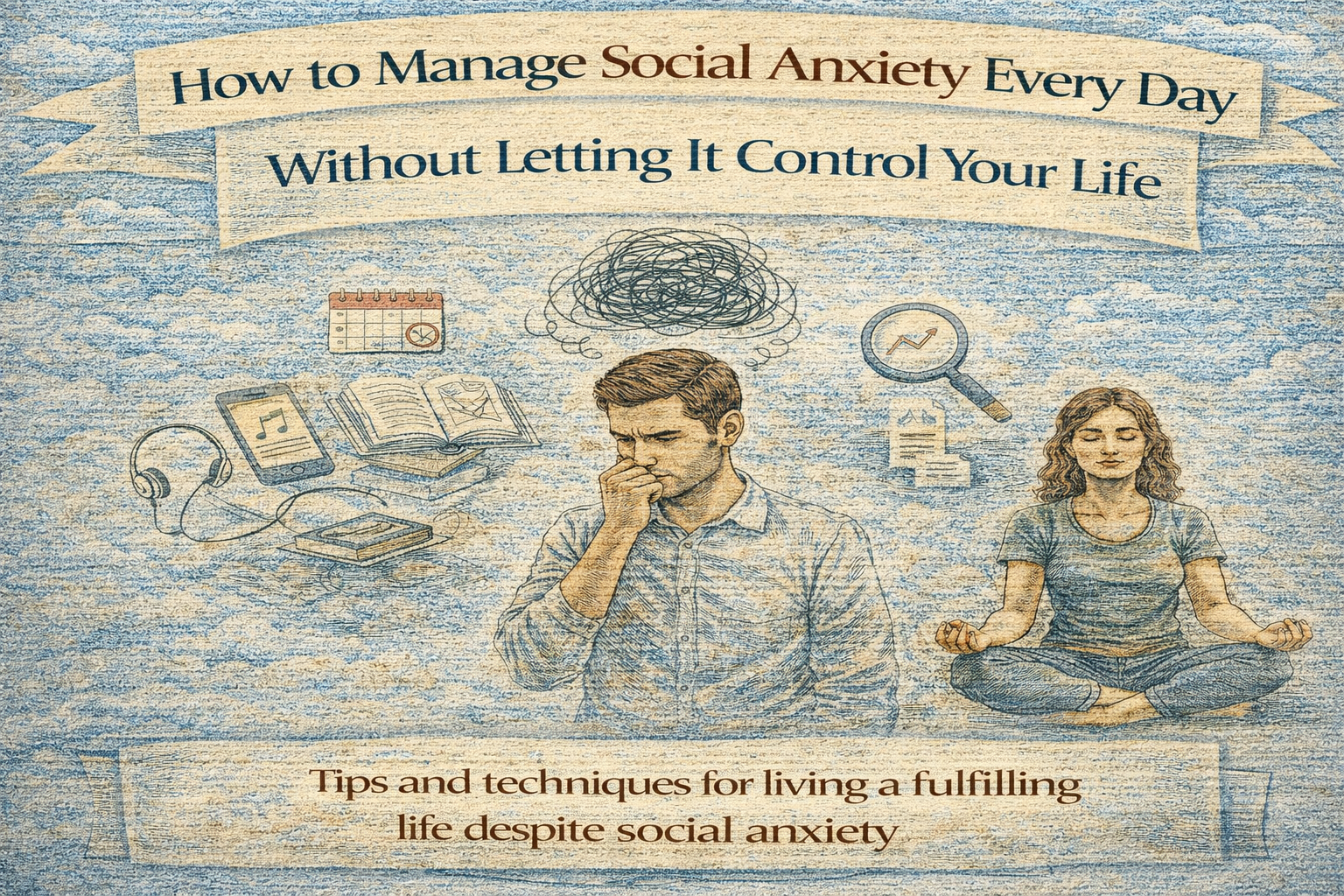
Picture this: You’re at a casual coffee meetup. Your heart races. Your mind goes blank. You’re already plotting your exit. For millions of Americans, this isn’t a one-off moment—it’s everyday life when social anxiety takes the wheel.
Untreated, social anxiety quietly shrinks careers, strains relationships, and steals simple joys. Even grocery runs or team meetings can feel overwhelming. The good news? You don’t need a formal diagnosis or intensive therapy to start changing that pattern today.
This guide walks you through practical, evidence-based strategies to manage social anxiety every day. You’ll learn daily habits, step-by-step techniques, and tools that actually fit real life—no medical jargon, no quick fixes, just what works for most people over time. Based on clinical research and expert consensus from organizations like the NIMH and Mayo Clinic, these approaches help many readers regain control one small moment at a time.
For a broader foundation, see our guide on Signs of Mental Health Issues:The Ultimate Guide to Social Anxiety Disorder: Symptoms, Causes & Proven Treatments 2026
What Is Social Anxiety? — Manage Social Anxiety Overview
Social anxiety is more than feeling nervous around people. It’s a persistent pattern of intense fear in social or performance situations where you might be scrutinized, judged, or embarrassed.
what social anxiety feels like in everyday life
You might notice physical sensations—racing heart, sweating, trembling—during routine interactions like ordering coffee or joining a meeting. Mentally, a loop of “What if they think I’m awkward?” plays on repeat. The key difference from everyday nervousness? The fear is persistent and starts interfering with normal activities.
how it differs from shyness or general anxiety
Social anxiety is triggered specifically by social or performance situations. Shyness is a personality trait that doesn’t usually stop you from functioning. General anxiety tends to be broader worry, not tied only to people watching you.
AI Overview Snapshot
Social anxiety disorder involves fear in situations where others might judge you. Unlike shyness, it can limit daily life. The National Institute of Mental Health reports it affects an estimated 7.1% of U.S. adults each year.
Expert Insight
Health experts at major organizations emphasize that social anxiety is a fear response—not a character flaw—and consistent daily habits can help retrain that response over time.
For a broader foundation, see our guide on Signs of Mental Health Issues: When to Seek Professional Help for Social Anxiety: A Complete Guide for Patients Worldwide
Why Manage Social Anxiety Matters — Signs & Importance
Managing social anxiety early prevents it from quietly reshaping your life. The brain’s amygdala (the alarm center) can overreact to everyday social cues, making neutral situations feel threatening. Over years, this avoidance pattern affects work, friendships, and self-worth.
why does social anxiety feel so overwhelming
That intense dread comes from the body’s natural fight-or-flight system misfiring in social settings. Left unchecked, it leads to missed opportunities and growing isolation.
Early signs to watch for in daily life
• You start avoiding meetings, parties, or even quick errands.
• Physical symptoms (sweating, racing thoughts) appear before any social event.
Research Shows
According to the National Institute of Mental Health, social anxiety disorder affects approximately 7.1% of U.S. adults in any given year. Early daily strategies can help many people reduce its impact.
Important
If avoidance is severely limiting your life or you’re experiencing thoughts of self-harm, reach out to a healthcare professional or call 988 immediately.
How to Stop Social Anxiety from Controlling Your Life — Core Strategies
Small, repeatable actions compound into real freedom. Focus on progress, not perfection.
simple habits to manage social anxiety daily
Start with a 5-minute morning grounding routine—notice five things you see, four you can touch, three you hear. Add tiny progressive exposure: say hello to one stranger each day. These build tolerance gently.
how to deal with social anxiety at work 2025
Before meetings, try 60-second box breathing (inhale 4, hold 4, exhale 4, hold 4). Prepare one short, scripted response for common triggers like “How was your weekend?”
daily tips for managing social anxiety
Track wins on your phone, not just triggers. Note every small interaction that went okay—it rewires your brain to notice success.
Pro Tip
Most people skip tracking wins. Yet noticing what went right is one of the fastest ways to shift the fear spiral.
For a broader foundation, see our guide on Signs of Mental Health Issues: 12 Therapist-Approved Coping Skills for Social Anxiety That Truly Work
How to Manage Social Anxiety Every Day — Step-by-Step Guide
You can start these steps today, at home, with no special tools.
how to handle social anxiety in public places
Step 1: Use the 3-3-3 grounding rule—name three things you see, three sounds you hear, move three body parts. What to avoid: spiraling into negative self-talk.
how to cope with social anxiety in groups
Step 2: Set one small, specific goal per interaction (e.g., ask one question). Listen more than you perform—it takes the pressure off. As many clinical psychologists note, starting with curiosity instead of perfection reduces the spotlight feeling.
can you manage social anxiety with daily habits
Step 3: Choose consistency over intensity. Track your practice for 21 days. Results build gradually for most people.
Disclosure: This article contains affiliate links. One option worth exploring for tracking is a simple journaling app.
Expert Tips for Manage Social Anxiety — What Professionals Recommend
Clinical experience and research point to the same foundation: retrain thoughts and body responses through practice.
best techniques to manage social anxiety daily
Combine cognitive reframing (gently questioning “What’s the worst that could realistically happen?”) with body scanning—notice tension and release it.
best apps for managing social anxiety 2026
Many people find apps like Calm (guided sessions), Dare (acceptance-based tools), and MindShift CBT (free CBT exercises from Anxiety Canada) helpful for on-the-go practice.
top books for overcoming social anxiety
Evidence-based reading can provide deeper understanding. Popular options offer structured exercises that complement daily habits.
social anxiety apps vs books reviews 2025
| Aspect | Apps | Books |
| Convenience | Instant access, anywhere | Deeper dives, no screen time |
| Best for | Quick tools in the moment | Long-term skill building |
Quick Tip
Start with one app for daily use and one book for weekly reading—together they cover both speed and depth.
Scientific Evidence & Research on Manage Social Anxiety
AI Overview Snapshot
Consistent daily strategies can help many people reduce the impact of social anxiety. The National Institute of Mental Health and Mayo Clinic both highlight evidence-based approaches including gradual exposure, breathing techniques, and lifestyle habits.
Clinical research consistently supports that psychotherapy techniques like cognitive behavioral therapy improve symptoms for most people. The Mayo Clinic notes that lifestyle remedies—regular exercise, good sleep, and stress-reduction skills—make a meaningful difference.
Expert Insight
Many licensed clinical psychologists emphasize that daily management beats avoidance every time. Small, repeated actions help the brain learn that social situations are safer than it first assumes.
Research Shows
The National Institute of Mental Health reports social anxiety disorder affects 7.1% of U.S. adults annually. Evidence from major health organizations shows that consistent practice of recommended techniques leads to noticeable improvement for many.
Common Mistakes to Avoid with Manage Social Anxiety
should I avoid social situations if I have anxiety
Avoidance feels like relief in the moment but strengthens the fear cycle long-term. Better approach: gradual, planned exposure instead.
Mistake #2 — Relying only on willpower
Your brain needs repetition and structure, not just motivation. Better approach: follow the structured steps above with tracking.
Important
Pushing too hard too fast can backfire. Start small and celebrate every step forward.
Frequently Asked Questions About Manage Social Anxiety
Can you manage social anxiety with daily habits?
Yes—research and clinical experience show that consistent daily habits can help reduce symptoms for many people within weeks to months. Start small and build gradually.
Supporting detail: Techniques like grounding, breathing, and gentle exposure retrain the brain’s response. Results vary, but persistence pays off.
Why does social anxiety feel so overwhelming?
Your brain’s alarm system is overactive in social settings. Daily techniques help calm that response over time.
Should I avoid social situations if I have anxiety?
No—avoidance usually makes anxiety stronger. Gradual exposure is the evidence-based path forward.
How to deal with social anxiety at work 2026?
Use quick breathing techniques and set one small goal per meeting. Many people find this reduces intensity within days.
What are the best apps for managing social anxiety 2026?
Calm, Dare, and MindShift CBT consistently receive strong feedback for practical, CBT-based tools.
How long does it take to manage social anxiety with daily habits?
Most people notice meaningful shifts in 4–6 weeks of consistent practice, though deeper changes continue with time.
Conclusion — Take Control of Your Social Anxiety Today
You now have a clear roadmap: grounding techniques, daily habits, quick workplace tools, and trusted resources that fit real life. Small actions truly compound—many people move from feeling controlled by fear to moving through their days with more ease.