You’re standing outside a party. Your hand is on the door handle. Your heart is pounding, your mind is running through every possible way tonight could go wrong, and a part of you is already looking for an excuse to go back home.
If that sounds familiar, you’re not alone — not even close.
The National Institute of Mental Health reports that 7.1% of American adults experience social anxiety disorder every year. Even more striking, the lifetime prevalence reaches 12.1% — meaning roughly one in eight people will deal with it at some point in their lives. Yet most of them suffer in silence for years, assuming they’re just “shy” or “awkward” when something much more specific is actually going on.
This guide pulls together the best advice from clinical research, mental health professionals, and expert consensus — written in plain language so anyone can understand and use it. Whether you’re a teenager dealing with this for the first time or an adult who’s been managing it for years, there’s something practical here for you.
For a broader foundation, see our guide on Signs of Mental Health Issues:The Ultimate Guide to Social Anxiety Disorder: Symptoms, Causes & Proven Treatments 2026
What Exactly Is Social Anxiety? (And What It Isn’t)
A lot of people mix up social anxiety with shyness. They’re related, but they’re not the same thing.
Shyness is a personality trait. Shy people might feel a bit uncomfortable in new social situations, but they can push through it. Over time, as they get more familiar with people or places, the discomfort usually fades on its own. Shyness doesn’t stop you from living your life.
Social anxiety is different in two important ways: intensity and impact.
The fear isn’t just mild discomfort — it’s intense and often overwhelming. And it doesn’t fade on its own with exposure. In fact, without the right strategies, it often gets worse over time because the person starts avoiding social situations, which makes the brain even more convinced that those situations are dangerous.
Here’s a simple comparison:
| Shyness | Social Anxiety | |
| Intensity | Mild discomfort | Intense, often overwhelming fear |
| Duration | Temporary | Persistent (often 6+ months) |
| Impact on life | Minimal | Affects work, school, relationships |
| Improves with time? | Usually yes | Usually requires targeted strategies |
The American Psychological Association is clear on this point: social anxiety is a recognized medical condition, not a character flaw or personal weakness. That distinction matters, because it changes how you approach getting better.
For a broader foundation, see our guide on Signs of Mental Health Issues: Real People, Real Recovery: Inspiring Social Anxiety Success Stories From the Worldwide
Why Do I Have Social Anxiety? Understanding the Real Causes
One of the most common questions people ask is: “Why me? Why do I feel this way when other people seem completely fine?”
The honest answer is that social anxiety usually develops from a combination of factors, not one single cause.
Genetics and Brain Chemistry
Anxiety disorders tend to run in families, which suggests a genetic component. On a biological level, people with social anxiety often have an overactive amygdala — the part of the brain responsible for detecting and responding to threats. In people with social anxiety, this threat-detection system fires in situations that most people would consider completely safe, like making small talk or walking into a room.
This isn’t a choice or a weakness. It’s brain wiring — and brain wiring can be changed with the right approaches.
Early Life Experiences
Past experiences shape how your brain learns to interpret social situations. Being bullied, publicly embarrassed, or raised in an environment where mistakes were heavily criticized can teach your brain that social situations equal danger. Growing up with overprotective parents who discouraged you from handling uncomfortable situations independently can also contribute, because you never got the chance to build up natural confidence.
The Reinforcement Cycle
Here’s what makes social anxiety particularly tricky: avoidance feels like relief in the short term but makes things worse in the long term.
When you skip a party because the thought of going makes you anxious, your brain registers: “Good call. That situation was dangerous. We successfully avoided it.” The anxiety gets stronger. The next time, the fear kicks in even earlier and feels even more intense. This is the reinforcement cycle, and breaking it is at the heart of every effective treatment approach.
Modern Life Factors
Social media adds a layer of complexity that previous generations didn’t face. Constant comparison to other people’s carefully curated highlight reels creates a distorted sense of how social life is supposed to look. Post-pandemic isolation has also left many people feeling socially rusty — the skills are still there, but they feel dusty from lack of use.
For a broader foundation, see our guide on Signs of Mental Health Issues: Best Social Anxiety Treatment Options in 2026: Evidence-Based Options That Actually Work
Does Social Anxiety Get Better With Age?
This is a common question, and the answer is: it depends on what you do about it.
Social anxiety often peaks during adolescence and early adulthood. For some people, it does ease naturally as they gain life experience and confidence. But for many others, it doesn’t improve on its own — and waiting around hoping it will disappear is often what turns a manageable problem into a much bigger one.
The encouraging news is that research consistently shows most people who actively use targeted strategies see meaningful, lasting improvement. Age isn’t the determining factor — consistent action is.
How to Overcome Social Anxiety Naturally: A Step-by-Step Approach
You don’t always need medication or years of therapy to make real progress with social anxiety. Many people see significant improvement through natural, evidence-based strategies practiced consistently over time.
Here’s how to build your approach:
Step 1: Master Your Breathing First
Before anything else, learn to control your body’s physical anxiety response. When you’re anxious, your breathing becomes shallow and rapid, which signals your nervous system to stay on high alert. Controlled breathing interrupts that signal.
The 4-7-8 technique is one of the most effective and well-researched methods:
- Breathe in slowly through your nose for 4 seconds
- Hold your breath for 7 seconds
- Exhale completely through your mouth for 8 seconds
- Repeat 3 to 4 times
The long exhale is the key — it activates your parasympathetic nervous system, which is your body’s natural “calm down” mode.
Practice this when you’re not anxious so it becomes automatic when you are. Use it before walking into a social situation, before a meeting, or anytime you feel the anxiety ramping up.
Step 2: Use Gradual Exposure (Start Much Smaller Than You Think)
This is the single most important strategy in managing social anxiety, and it’s backed by decades of clinical research.
The principle is simple: you can’t think your way out of social anxiety. You have to experience your way out of it. Every time you face a social situation and survive it — even if it’s uncomfortable — you’re giving your brain new evidence that the situation wasn’t actually dangerous.
The mistake most people make is trying to go too big too fast. They try to cure their social anxiety by forcing themselves to attend a huge party alone, it feels terrible, and they conclude that nothing works.
The correct approach is to start almost embarrassingly small:
Week 1 type goals:
- Make eye contact and smile at a cashier
- Say “morning” to a neighbor
- Ask a stranger what time it is
Week 2-3 type goals:
- Have a brief conversation with someone you see regularly (barista, coworker you don’t know well)
- Make a comment in a small group setting
Month 2 and beyond:
- Start conversations with new people
- Contribute to meetings
- Attend small social gatherings
Each small success is a piece of evidence your brain collects: “I did that. Nothing catastrophic happened.” Over time, those pieces of evidence add up and genuinely change how your brain responds to social situations.
Step 3: Shift Your Focus Outward
One of the hallmarks of social anxiety is what psychologists call “self-focused attention” — you spend most of your mental energy monitoring yourself. How do I look? Did that sound weird? Are they bored? Is my face red?
This internal spotlight makes anxiety worse because you’re giving all your attention to the threat (yourself performing) rather than the actual interaction.
A powerful technique is to deliberately redirect your focus outward — onto the other person.
What are they actually saying? What do they seem interested in? What’s something you could ask them?
This sounds simple, but it’s genuinely effective. When you’re focused on the other person, you don’t have the mental bandwidth left to catastrophize about yourself. And a bonus: people feel heard and valued when someone pays real attention to them, so your conversations actually go better.
Step 4: Challenge the Stories Your Brain Tells You
Social anxiety comes loaded with automatic negative thoughts — quick, instinctive interpretations of social situations that feel completely true but are usually exaggerated or distorted.
Common ones include:
- “They all think I’m boring” (mind reading — you can’t actually know this)
- “If I mess this up, everyone will remember forever” (catastrophizing)
- “I always say the wrong thing” (overgeneralizing from one bad experience)
The technique to counter these is called cognitive reframing. It doesn’t mean telling yourself everything is great when it isn’t. It means replacing distorted thinking with more accurate thinking.
Try asking yourself these questions when an anxious thought shows up:
- What’s the actual evidence for this thought?
- What’s the most realistic thing that would happen here?
- If a friend told me they were having this thought, what would I say to them?
“Everyone thinks I’m awkward” becomes “I feel awkward, but most people are focused on themselves. Even if I’m not perfectly smooth, that’s completely normal and human.”
This takes practice. The thoughts are fast and feel automatic. But over time, consistently questioning them trains your brain toward more balanced thinking.
Step 5: Build Confidence Through Small Talk Practice
Small talk gets a bad reputation as shallow and pointless. But for people with social anxiety, it’s actually one of the most important skills to develop — because it’s the entry point for almost every relationship and opportunity.
The good news is that small talk is a skill, not a talent. You can get better at it with deliberate practice.
Start with micro-challenges:
- Comment on something in your shared environment (“Busy in here today”)
- Ask a simple opinion question (“Have you tried that new place down the street?”)
- Give a genuine, specific compliment (“I liked what you said in that meeting earlier”)
Keep a simple journal of your daily small talk attempts. Not to judge them, but to track your progress. You’ll notice patterns — situations where it went better than expected, topics that flow naturally, approaches that feel comfortable. This data helps you build on what works.
Research consistently shows that people who practice small talk regularly see meaningful improvement within weeks.
Step 6: Deal With Parties and Big Social Events Strategically
Parties and large social gatherings are often peak anxiety territory. Having a specific game plan helps enormously.
Before:
- Prepare two or three easy conversation starters so you’re not starting from zero
- Do a breathing exercise in the car before going in
- Set a specific, manageable goal — not “be the life of the party” but “have one real conversation”
When you arrive:
- Get there a little early if possible — it’s much easier to meet people when a room is half-empty than when you’re walking into a full crowd
- Find something to do with your hands (a drink, helping with something) which reduces the “standing around feeling exposed” sensation
During:
- Focus outward — listen, ask questions, be genuinely curious about the people you talk to
- Give yourself permission to take short breaks (step outside for two minutes, make a trip to the bathroom) if you need to reset
Afterward:
- Resist the urge to replay the evening and catalog everything you did wrong
- Instead, find one thing that went okay — anything — and write it down
Step 7: Take Care of Your Body
This might sound disconnected from social anxiety, but your body’s baseline state directly affects how your brain handles stress.
Exercise: Multiple research reviews confirm that regular physical activity reduces overall anxiety levels. You don’t need to run marathons — 30 minutes of brisk walking five days a week is enough to make a real difference. Exercise reduces stress hormones, improves sleep, and gives you a consistent sense of accomplishment.
Sleep: Chronic sleep deprivation keeps your nervous system in a heightened stress state, which makes every social interaction feel harder than it should. Prioritizing 7 to 9 hours of sleep is one of the most underrated anxiety interventions available.
Caffeine: Caffeine is a stimulant that physically mimics anxiety symptoms — increased heart rate, heightened alertness, sometimes shakiness. If you’re already prone to social anxiety, extra caffeine before a social situation is pouring fuel on a fire.
Expert Tips Specifically for the Workplace
Work is one of the most common environments where social anxiety becomes a problem — and one of the most consequential, because it directly affects your career.
Before meetings:
- Prepare one or two things you could contribute — even one specific question you could ask
- Arrive a couple of minutes early so you’re already settled when others arrive
- Do a quick breathing reset beforehand
During meetings:
- Contribute early — research shows the longer you wait, the harder it becomes
- Focus on listening genuinely rather than performing attention
- Remember that your input has value even if it’s not perfect
Building confidence over time:
- Keep a private record of contributions that went well
- Identify one colleague who seems approachable and build that relationship first
- Volunteer for small, visible roles (taking notes, organizing something minor) to build comfort with being seen positively
Common Mistakes That Keep People Stuck
Knowing what not to do is just as important as knowing what to do.
Avoiding everything. It feels like relief. It’s actually the opposite of relief — it strengthens the fear every time. Even tiny, uncomfortable exposures are better than complete avoidance.
Relying purely on willpower. “I’m just going to force myself to stop being anxious” doesn’t work. Social anxiety isn’t a decision. Structured strategies and gradual exposure work — raw willpower alone doesn’t.
Ignoring physical health. Poor sleep, no exercise, and too much caffeine create the perfect conditions for anxiety to thrive. The body and mind are not separate.
Expecting fast results and giving up. Most people notice meaningful improvement within four to eight weeks of consistent practice. Deeper change typically takes three to six months. That’s not a flaw in the process — that’s how brain change works. Consistency beats intensity every time.
When to Get Professional Help
Self-help strategies are genuinely powerful for mild to moderate social anxiety. But some situations call for professional support:
- Social anxiety is significantly affecting your job, studies, or important relationships
- You’ve been avoiding key situations for months
- You’ve tried self-help strategies consistently and aren’t seeing progress
- The anxiety feels completely unmanageable
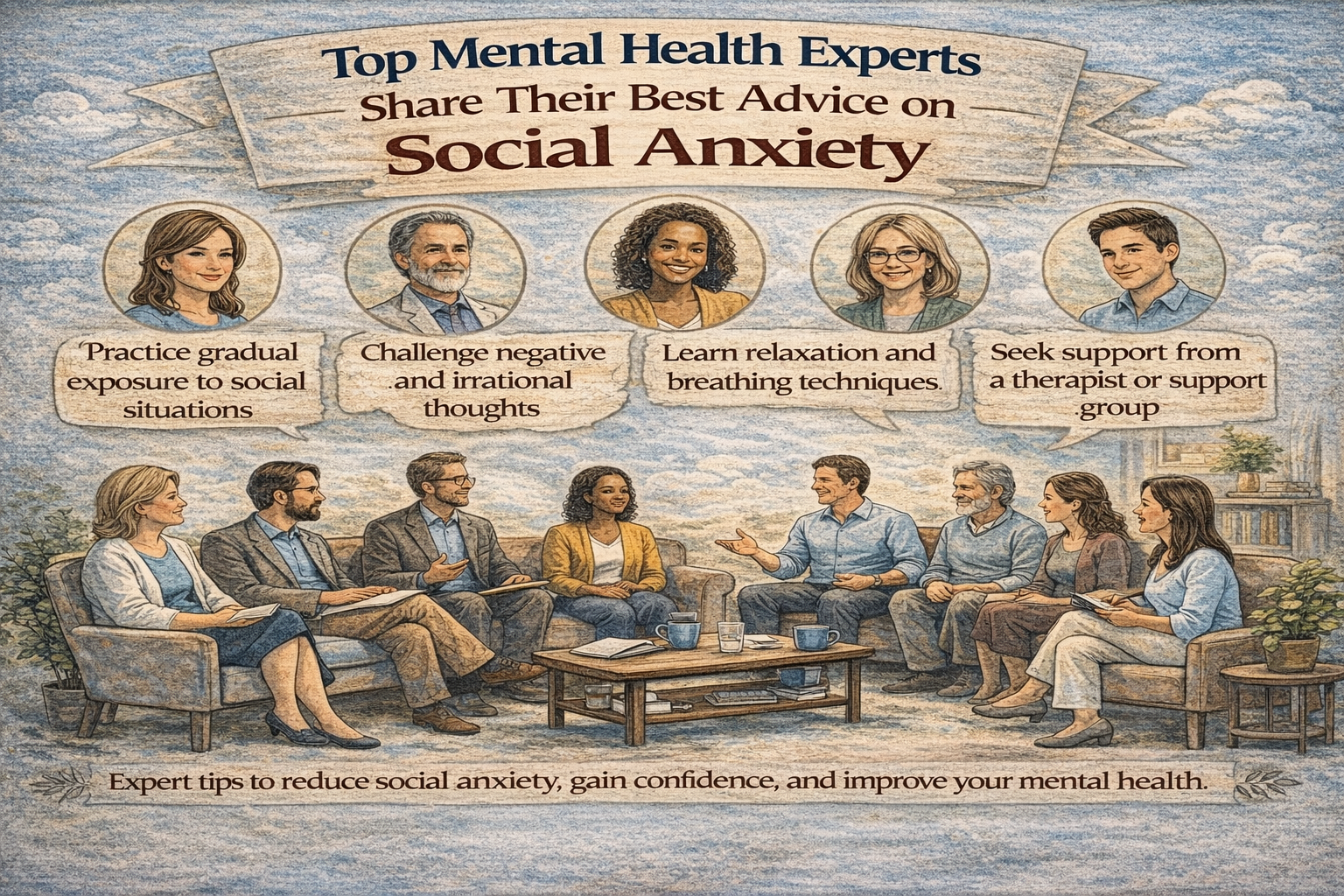
Cognitive Behavioral Therapy (CBT) is the most well-researched treatment for social anxiety, with strong evidence across dozens of clinical studies. It works by targeting exactly the patterns described in this guide — avoidance behaviors and distorted thinking — in a structured, supported way.
Seeking professional help isn’t admitting defeat. It’s choosing the most effective tool available.
Final Thoughts
Social anxiety tells you a story about yourself — that you’re too awkward, too boring, too much, not enough. That other people can see exactly how nervous you are. That one wrong word will define how everyone sees you forever.
None of that is true. But you won’t convince yourself of that by thinking harder about it. You convince yourself by taking small actions, collecting small wins, and gradually building evidence that the story social anxiety tells you is wrong.
Start with one thing from this guide. Do it tomorrow. Do it again the day after. That’s how this works.