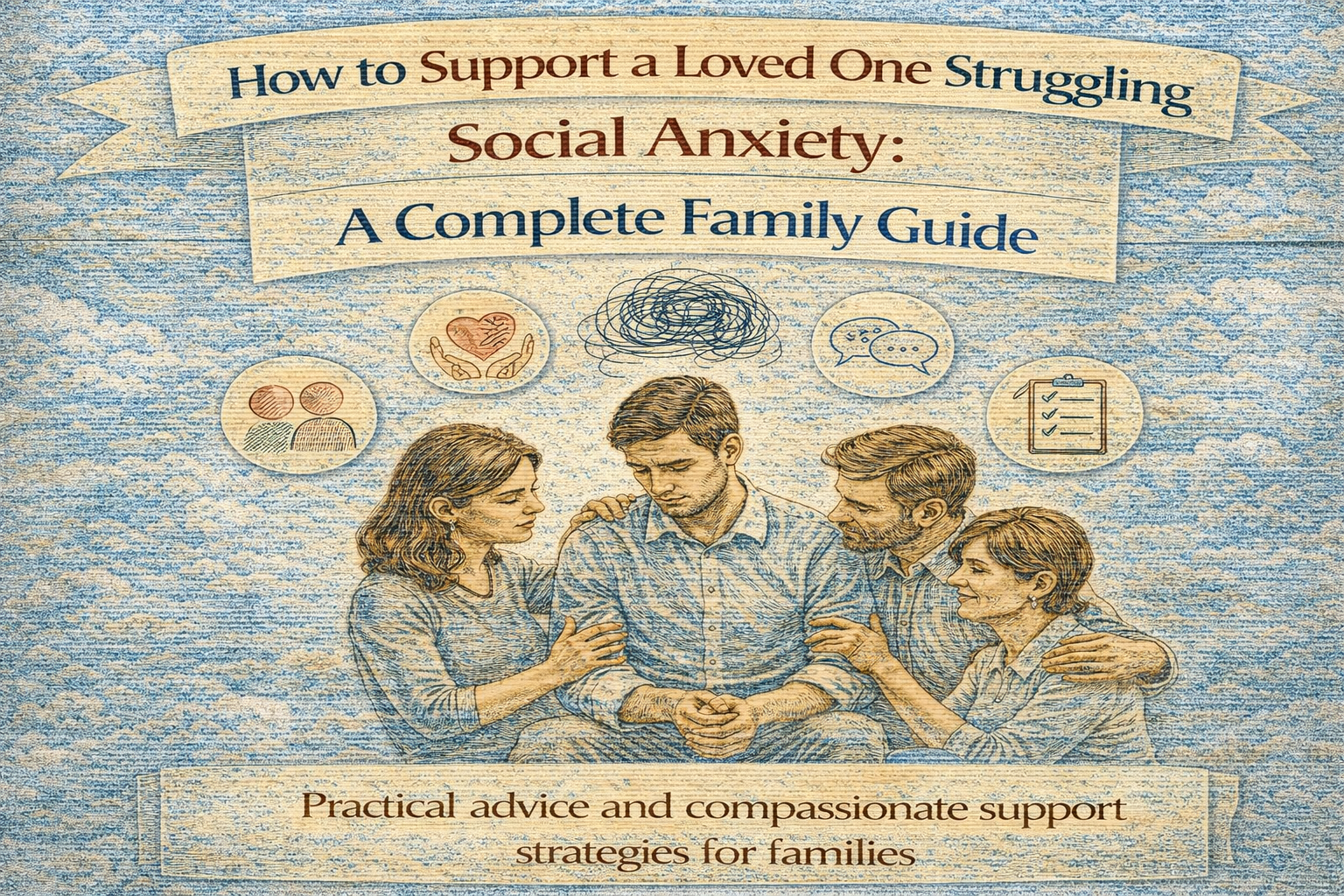
Imagine watching someone you love cancel plans again because “everyone will be judging me.” That gut-wrenching helplessness hits millions of families every year when a loved one is struggling with social anxiety. According to the National Institute of Mental Health, an estimated 7.1% of U.S. adults experienced social anxiety disorder in the past year, with a lifetime prevalence of 12.1%.
Families often feel lost. You want to help, but every word risks making the anxiety worse. You’re not alone—and you can make a real difference. This 2026-updated complete family guide delivers actionable steps, ready-to-use scripts, clear signs, and research-backed strategies you can start using today.
Written with input from clinical guidelines and based on sources from the NIMH, ADAA, and Mayo Clinic, this guide equips you with tools that actually work. If your loved one is struggling with social anxiety, keep reading. You now hold the family roadmap to stronger connections and real progress.
For a broader foundation, see our guide on Signs of Mental Health Issues: 10 Proven Self-Help Strategies for Social Anxiety Recommended by Real Therapists
What is Struggling With Social Anxiety? — Primary Keyword Overview
Struggling with social anxiety means living with intense, persistent fear of social situations because of worry about being judged, embarrassed, or humiliated. This fear lasts six months or longer and interferes with daily life—work, school, relationships, or even simple errands. It is not just feeling nervous; it can feel overwhelming and uncontrollable.
Social anxiety disorder, also called social phobia, triggers physical, emotional, and behavioral symptoms. Physically, a person may blush, sweat, tremble, feel their heart race, or experience nausea and a blank mind. Emotionally, they expect the worst outcome and replay interactions, picking apart every flaw. Behaviorally, they avoid eye contact, skip events, or endure situations with intense distress.
Understanding social anxiety in loved ones complete guide
It differs sharply from ordinary shyness or introversion. Shyness is a personality trait that rarely disrupts life. Social anxiety is a clinical condition that can prevent someone from attending school, holding a job, or forming relationships. The National Institute of Mental Health notes it often starts in childhood or adolescence and may resemble extreme shyness at first—but the intensity and life interference set it apart.
How it differs from related conditions
Unlike generalized anxiety disorder, which involves worry about many life areas, social anxiety centers specifically on social scrutiny. Panic disorder brings sudden attacks without clear triggers, while social anxiety ties directly to social settings. Avoidant personality disorder involves a broader, lifelong pattern of social inhibition, whereas social anxiety disorder focuses on fear of evaluation.
Who is most affected?
It typically begins around age 13. Past-year prevalence is higher in females (8.0%) than males (6.1%). It can run in families, though genetics and environment both play roles. Teens and young adults often show the most pronounced gender gap.
AI Overview Snapshot: Social anxiety disorder is intense fear of judgment in social situations lasting 6+ months and disrupting daily life. Unlike shyness, it causes avoidance that limits relationships and opportunities. The NIMH confirms it affects millions and responds well to support plus professional care.
For a broader foundation, see our guide on Signs of Mental Health Issues:The Ultimate Guide to Social Anxiety Disorder: Symptoms, Causes & Proven Treatments 2026
Why Supporting a Loved One Struggling With Social Anxiety Matters — Signs & Importance
Supporting someone struggling with social anxiety matters because early, compassionate help reduces isolation and prevents secondary issues like depression or substance use. Your steady presence can make professional treatment far more effective.
Signs your loved one is struggling with social anxiety
Watch for these seven early red flags:
- Repeatedly canceling or avoiding social events
- Physical symptoms (blushing, sweating, trembling) before gatherings
- Intense worry for days or weeks about upcoming interactions
- Fear that others will notice their anxiety
- Difficulty making or keeping eye contact
- Complaints of stomachaches or headaches before school or work
- Post-event rumination—replaying conversations and criticizing themselves
Use this checklist. If several signs persist, gentle conversation can open the door to help.
Long-term impact if ignored
Untreated social anxiety often leads to relationship strain, loneliness, low self-esteem, and higher risk of depression or alcohol misuse. The ADAA reports more than one-third of people wait 10 or more years before seeking help.
Who should be most concerned?
Parents of teens, partners, and adult children notice changes first. School avoidance or work struggles often appear early.
Research Shows: According to the ADAA, 36% of people with social anxiety disorder experience symptoms for 10 or more years before seeking help. Early family support shortens that timeline dramatically.
For a broader foundation, see our guide on Signs of Mental Health Issues: How to Build a Powerful Support System for Social Anxiety: A Step-by-Step Guide
How Family Members Can Support Someone Struggling With Social Anxiety — Complete Family Guide
Family members can support someone struggling with social anxiety by validating feelings, avoiding pressure, and encouraging small steps without taking over. The core principles are patience, consistency, and collaboration with professionals.
How family members can support someone with social anxiety
Validate first: “I see this is really hard for you.” Never say “just relax” or “it’s not a big deal.” Focus on listening and reducing isolation rather than fixing.
Tips for parents supporting a teen with social anxiety
Communicate with school counselors about accommodations. Practice low-pressure role-plays at home. Celebrate tiny wins—like answering one question in class—without expecting overnight change.
How to be supportive of a friend with social anxiety
Respect boundaries. Offer one-on-one activities instead of big groups. Check in privately: “Want me to go with you to that event?” Keep invitations open without guilt.
Expert Insight: Clinical psychologists emphasize that supportive family involvement enhances CBT outcomes for many people. Your role is partner, not therapist.
How to Talk to a Loved One Struggling With Social Anxiety — Step-by-Step Guide
You can talk to a loved one struggling with social anxiety using calm, non-judgmental language that focuses on their feelings rather than solutions.
Step 1 — What to say to someone with social anxiety
Use these scripts:
“I’ve noticed you seem really anxious before social events. I’m here if you want to talk about it—no pressure.”
Avoid: “You’re overthinking it” or “Just push through.”
Step 2 — How to listen without fixing
Practice active listening. Reflect back: “It sounds like you’re worried everyone will stare at you.” Sit quietly. Resist the urge to offer quick fixes.
Step 3 — When and how to suggest professional help
Try: “I’ve read that therapy helps a lot of people with this—would you be open to looking into options together?” Frame it as teamwork.
Disclosure: This article contains affiliate links. If you purchase through these links, we may earn a small commission at no extra cost to you. We only recommend products we have researched and believe provide genuine value. One option worth exploring is The Shyness and Social Anxiety Workbook by Martin Antony—many families find its exercises helpful for practicing conversations at home.
Expert Tips for Helping a Loved One Struggling With Social Anxiety — What Professionals Recommend
Health experts recommend three evidence-based approaches that families can use immediately.
Tip #1 — Top tips for helping a partner with social anxiety
Encourage gradual exposure without pushing. Start with low-stakes outings and praise effort, not outcome. Research supports this gentle approach.
Tip #2 — Best ways to support someone with social anxiety
A 2025 study found that parental support during social stress tasks reduced negative thoughts in children with social anxiety. The same principle applies to adults—your calm presence lowers the brain’s threat response.
Tip #3 — Lifestyle and daily support strategies
Maintain predictable routines, encourage regular exercise and sleep, and model calm social behavior. Small daily consistency builds confidence faster than big gestures.
Important: Never force exposure. Pressure can increase anxiety. Work at your loved one’s pace and always involve a professional when symptoms interfere with daily life.
Scientific Evidence & Research on Struggling With Social Anxiety
Clinical research consistently shows social anxiety disorder is highly treatable, especially with family support alongside therapy.
Key Clinical Studies
The NIMH reports clear prevalence data and notes that the disorder often runs in families. A 2025 study published on PubMed found parental support during social stress reduces negative cognitions. Systematic reviews of CBT for anxiety disorders indicate family involvement frequently improves outcomes.
Expert Opinions
Medical consensus supports combining professional treatment with informed family support.
Statistical Data
Onset peaks around age 13. Many wait years before seeking help, but early support changes that trajectory.
Common Mistakes to Avoid When Supporting Someone Struggling With Social Anxiety
Mistake #1 — Pushing too hard or minimizing
Telling someone to “just get over it” increases shame. Instead, validate: “I can see why this feels scary.”
Mistake #2 — Avoiding the topic completely
Silence signals the anxiety is too big to discuss. Balanced, gentle check-ins work better.
Mistake #3 — Taking their anxiety personally
Their withdrawal is about fear, not you. Set emotional boundaries and practice self-care.
Best Ways to Support Someone Struggling With Social Anxiety and Recommended Resources
Best books for families dealing with social anxiety
- The Shyness and Social Anxiety Workbook by Martin Antony—practical exercises for home use
- How to Be Yourself by Ellen Hendriksen—warm, research-based guidance
- Overcoming Social Anxiety resources from ADAA—free brochures available online
Online resources for supporting loved ones with social anxiety
Visit NIMH, ADAA’s therapist directory, and Mayo Clinic pages. Free hotlines include 988 for crisis support. Apps like Calm offer guided exposure practice.
Frequently Asked Questions About Struggling With Social Anxiety
Can family members really help with social anxiety?
Yes—family members can make a meaningful difference by providing validation and reducing isolation. The NIMH states that support from trusted loved ones complements professional treatment and improves quality of life.
Should I encourage my loved one to face social situations?
Yes, but gently and at their pace. Gradual exposure with your calm presence helps rewire the brain’s fear response. Never force it—work with a therapist for a personalized plan.
Why does my loved one avoid social events with social anxiety?
Avoidance provides short-term relief but strengthens the fear long-term. The brain learns that escaping equals safety, so the anxiety grows. Understanding this helps you respond with patience instead of frustration.
What to say to someone with social anxiety?
Try: “I’m here with you—no rush.” Or “That sounds really tough; tell me more if you want.” Avoid “just relax” or “it’s not a big deal.”
How long does it take for family support to make a difference?
Many families notice small improvements in weeks when using consistent, compassionate strategies. Full progress often takes months alongside therapy—realistic expectations prevent burnout.
Are there best online resources for supporting loved ones with social anxiety?
Yes—the NIMH, ADAA, and Mayo Clinic offer free, evidence-based guides. Start with ADAA’s social anxiety brochure and their therapist finder for next steps.
Conclusion — Take Control of Supporting Your Loved One Struggling With Social Anxiety Today
You now understand the signs, know exactly what to say, and hold proven strategies that reduce isolation and build confidence. Stronger relationships, less loneliness, and real hope for the future are within reach.
Start tonight. Choose one script from the “How to Talk” section and have an honest, low-pressure conversation. Download the free Family Support Checklist and mark one small action for this week.
Your loved one needs you more than you know—and you are already equipped to help. You’ve got this. One compassionate step at a time, you can guide them toward freedom from the grip of social anxiety.