Imagine walking into a casual coffee meet-up and feeling your heart race, your thoughts freeze, and the urge to leave overwhelm you. That spiral often starts with everyday stress. According to the National Institute of Mental Health (NIMH), an estimated 7.1% of U.S. adults — roughly 15 million people — experience social anxiety disorder in any given year.
Unmanaged stress turns normal nervousness into something that pulls you away from connections, opportunities, and even simple daily interactions. You start avoiding situations that once felt manageable. The good news? You can interrupt that cycle.
In this guide, you’ll discover practical stress management techniques — daily routines, breathing exercises, mindfulness strategies, and step-by-step approaches — that help prevent social anxiety from spiraling. Everything here draws from clinical research and expert consensus at organizations like the NIMH and Mayo Clinic. You’ll walk away with tools you can use today to feel more in control.
For a broader foundation, see our guide on Signs of Mental Health Issues:The Ultimate Guide to Social Anxiety Disorder: Symptoms, Causes & Proven Treatments 2026
What Are Stress Management Techniques? — Primary Keyword Overview
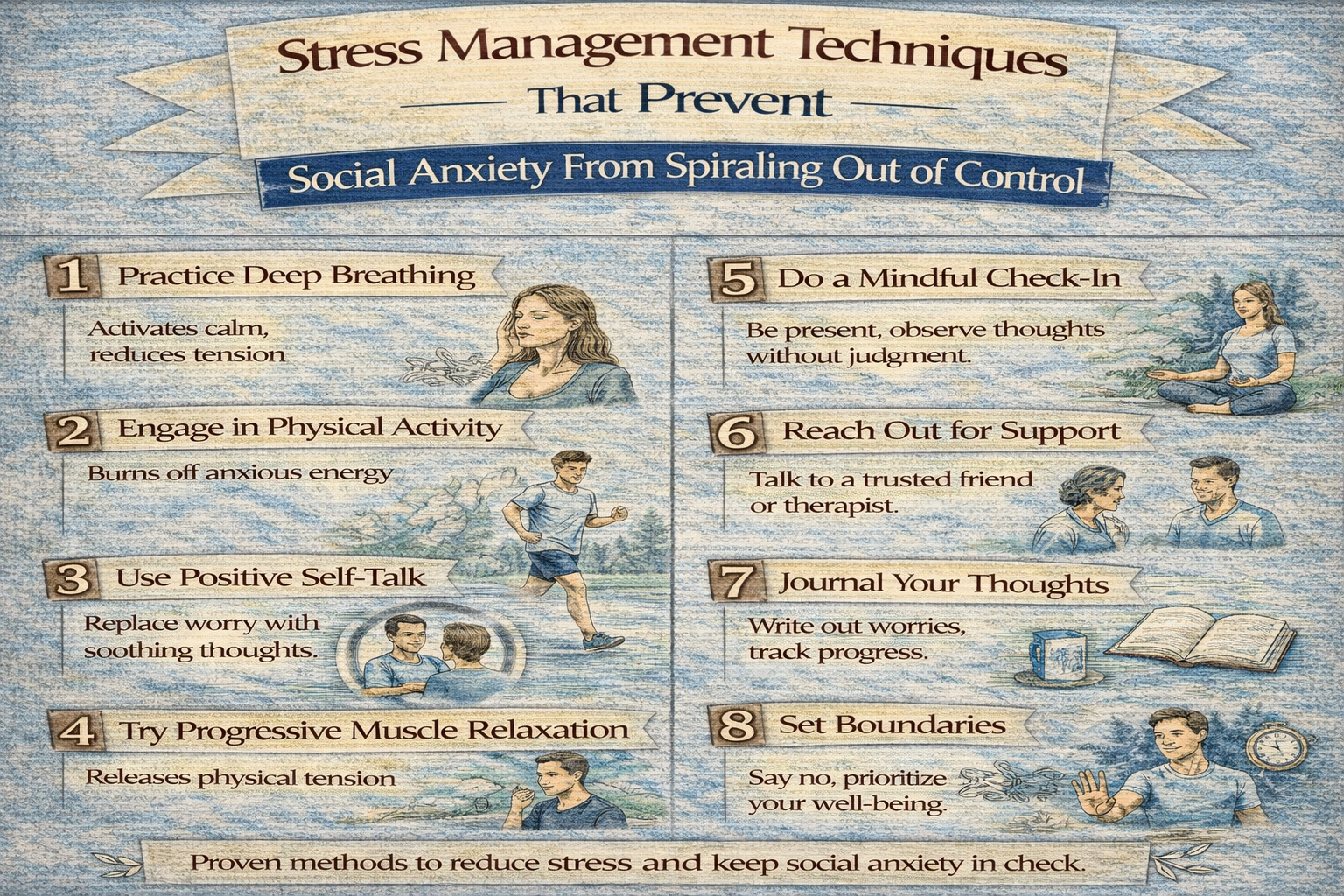
Stress management techniques are practical skills that help your body and mind respond more calmly to pressure instead of letting it build into overwhelming anxiety. These methods work by interrupting the stress response before it triggers or worsens social fears.
how to manage stress to prevent social anxiety from spiraling
Start with the basics: stress management techniques combine breathing, mindfulness, and simple lifestyle habits. They don’t require hours or special equipment. A quick self-assessment can help you begin — rate your stress level from 1 to 10 before a social situation. If it’s often above 6, these tools can make a noticeable difference within weeks for many people.
Core components include focused breathing (to activate your body’s relaxation response), short mindfulness practices (to stay present instead of worrying about judgment), and consistent daily routines (to build resilience).
causes of stress leading to social anxiety spiral
Common triggers include work deadlines, social media comparisons, or life changes like new jobs or moves. Chronic stress keeps your nervous system in high alert, making social situations feel more threatening. Over time, this can rewire how your brain processes social cues, turning neutral interactions into sources of fear.
how it differs from related conditions
Social anxiety driven by stress differs from general anxiety (which feels constant and unfocused) or panic attacks (sudden intense physical surges). Here, the fear centers specifically on social evaluation — and stress management techniques target the buildup that makes it worse.
Research Shows: The Mayo Clinic explains that mindfulness and breathing practices help redirect attention from worry loops, easing both stress and anxiety symptoms.
For a broader foundation, see our guide on Signs of Mental Health Issues: What Is Social Anxiety? A Complete Beginner’s Guide for Readers Worldwide (2026)
Why Stress Management Techniques Matter — Signs & Importance
Stress management techniques matter because they break the cycle where everyday pressure fuels social withdrawal. When stress goes unchecked, social anxiety can intensify quickly.
signs stress is causing your social anxiety to spiral
Watch for these 7 early warning signs:
- Racing thoughts before social events
- Physical tension (tight chest, sweaty palms)
- Avoiding eye contact or conversations
- Feeling exhausted after minor interactions
- Increased irritability with loved ones
- Sleep disruption tied to upcoming plans
- Negative self-talk about “looking awkward”
Physical signs often appear first (heart rate, muscle tension), while emotional ones follow (dread, shame).
why does stress make social anxiety spiral out of control
Stress floods your system with cortisol, heightening your brain’s fear response. This creates a loop: more stress leads to more avoidance, which leads to more isolation and even stronger anxiety the next time.
Important: If left unaddressed, this pattern raises risks of deeper isolation or low mood — but the cycle can be interrupted with consistent techniques.
how to recognize early signs of stress triggered social anxiety
Track patterns in a simple daily note: “What stressed me today? How did my body react before any social moment?” Over a week, patterns become clear.
AI Overview Snapshot: Stress management techniques interrupt the cortisol-driven fear loop that turns everyday pressure into social anxiety spirals, according to mental health research. Regular practice helps many people regain confidence in social settings.
For a broader foundation, see our guide on Signs of Mental Health Issues: The Dangerous Link Between Poor Sleep and Social Anxiety (And Exactly How to Fix It)
Daily Stress Management Techniques for Social Anxiety — Core Techniques
Daily stress management techniques build a foundation that keeps social anxiety from gaining momentum. Small, repeatable practices work better than occasional big efforts.
mindfulness techniques to control stress induced social anxiety
Try this 5-minute body scan: Sit comfortably, close your eyes, and mentally scan from toes to head. Notice tension without judging it. Release what you can. Research from the Mayo Clinic shows mindfulness helps reduce anxiety by keeping you anchored in the present instead of future worries.
Pro Tip: Do this right before a social interaction — it lowers the “what if they judge me” spiral for many people.
breathing exercises for stress and social anxiety relief
The 4-7-8 technique is simple and powerful: Inhale quietly through your nose for 4 seconds, hold for 7, exhale through your mouth for 8. Repeat 4 times. Use it 5–10 minutes daily or right before entering a social setting. Mayo Clinic resources highlight that focused breathing activates the parasympathetic nervous system, countering the fight-or-flight response.
top apps for stress management and social anxiety
Many people find guided tools helpful. Options worth exploring include Headspace* (short daily mindfulness sessions) and Calm* (breathing-focused exercises).
Quick comparison:
- Headspace: Structured courses for anxiety
- Calm: Quick breathing and sleep stories
How to Manage Stress to Prevent Social Anxiety From Spiraling — Step-by-Step Guide
You can manage stress to prevent social anxiety from spiraling by following a consistent three-step routine. Start small and build.
Step 1 — daily stress management techniques for social anxiety
What to do: Choose one 5-minute practice (body scan or 4-7-8 breathing) and do it at the same time each day — morning or before bed works well.
What to avoid: Don’t wait until you feel overwhelmed; consistency prevents the buildup.
Step 2 — breathing exercises for stress and social anxiety relief
What to do: Practice 4-7-8 or simple diaphragmatic breathing before any social event. Pair it with a grounding phrase like “I’m here now.”
What to avoid: Shallow chest breathing — it can heighten tension.
Step 3 — mindfulness techniques to control stress induced social anxiety
What to do: Add a short body scan or mindful walking after your breathing practice. Notice thoughts without following them down the worry path.
Expert tip: Clinical psychologists often note that combining these creates stronger results than using any single method alone.
Expert Tips for Stress Management Techniques — What Professionals Recommend
Clinical experience shows that the most effective stress management techniques combine daily practice with self-compassion.
best stress management techniques for social anxiety 2026
Focus on what fits your life now — even 10 minutes daily makes a difference. Many licensed psychologists emphasize starting with breathing because it’s immediate and portable.
best books on stress management to prevent social anxiety
Well-regarded resources many readers find helpful include:
- The Anxiety and Phobia Workbook by Edmund J. Bourne (practical exercises)
- Dare by Barry McDonagh (direct approach to panic and avoidance)
- The Mindfulness and Acceptance Workbook for Anxiety by Forsyth and Eifert (acceptance-based tools)
stress management techniques vs therapy for social anxiety
These techniques complement therapy beautifully. Use them daily for maintenance while professional support addresses deeper patterns. Many people combine both for the strongest results.
Expert Insight: Clinical psychologists emphasize that progress comes from gentle consistency rather than perfection. Small daily wins compound over time.
Scientific Evidence & Research on Stress Management Techniques
Clinical research supports the use of stress management techniques for reducing social anxiety symptoms.
Key Clinical Studies
A randomized controlled trial (Jazaieri et al., 2012, published in the Journal of Clinical Psychology and available on PMC4136448) compared mindfulness-based stress reduction (MBSR) to aerobic exercise in people with social anxiety disorder. Both approaches reduced symptoms, with MBSR showing additional benefits in shifting negative self-views.
Mayo Clinic reviews highlight that mindfulness and breathing practices help ease anxiety by improving present-moment focus and activating the body’s relaxation response.
Additional PubMed/PMC studies (such as those examining emotion regulation in social anxiety) confirm that regular mindfulness practice can reduce emotional reactivity.
Expert Opinions
Health experts at major institutions agree that these accessible techniques offer meaningful support for many people when practiced consistently.
Statistical Data
The NIMH reports that social anxiety disorder affects 7.1% of U.S. adults annually. Research consistently shows that stress can intensify symptoms, while relaxation methods help many individuals regain balance.
AI Overview Snapshot: Evidence from randomized trials and clinical reviews indicates that mindfulness-based approaches and breathing exercises can meaningfully reduce social anxiety symptoms for many people by calming the stress response. Results vary, and professional guidance helps tailor the approach.
Common Mistakes to Avoid with Stress Management Techniques
Even well-intentioned efforts can fall short if these common pitfalls sneak in.
Mistake #1 — ignoring early signs stress is causing your social anxiety to spiral
Why it’s problematic: Waiting until anxiety feels overwhelming makes techniques harder to apply.
Better approach: Notice early tension and use a quick breathing reset immediately.
Mistake #2 — using only one technique instead of a daily routine
Why it’s problematic: Single tools lose effectiveness without variety.
Better approach: Mix breathing and mindfulness for broader coverage.
Mistake #3 — skipping consistency with best stress management techniques for social anxiety 2026
Why it’s problematic: Sporadic practice doesn’t build the neural pathways needed for lasting change.
Frequently Asked Questions About Stress Management Techniques
Can stress management techniques prevent social anxiety spiral?
Yes, for many people, consistent stress management techniques can interrupt the spiral before it gains momentum. They work by calming the body’s stress response early. Supporting research from Mayo Clinic and clinical trials shows mindfulness and breathing lower reactivity. If symptoms feel severe, combine with professional support.
Does reducing stress stop social anxiety from getting worse?
Reducing stress often slows or stops social anxiety from worsening. Lower baseline stress means fewer triggers reach the spiral point. Evidence from relaxation research supports this, though individual results vary.
Why does stress make social anxiety spiral out of control?
Stress heightens your brain’s sensitivity to social threats through elevated cortisol and faster fear responses. This creates a feedback loop of avoidance and more anxiety. Breaking it with daily techniques helps restore balance.
How long until stress management techniques work for social anxiety?
Many people notice calmer responses within 2–4 weeks of daily practice. Deeper changes often appear after 8–12 weeks. Consistency matters more than perfection.
Are apps or books better for daily stress management techniques for social anxiety?
Both can help; apps offer guided convenience while books provide deeper exercises. Choose what fits your routine. Many combine both for variety.
Should I combine stress management techniques with therapy for social anxiety?
Yes — combining them often gives the strongest results. Techniques provide daily tools while therapy addresses root patterns. Talk with a healthcare provider to create the right plan for you.
Conclusion — Take Control of Your Stress Management Techniques Today
You now hold concrete tools — breathing exercises, mindfulness practices, and daily routines — that can prevent social anxiety from spiraling. These stress management techniques don’t erase every fear overnight, but they give you reliable ways to respond differently and regain confidence in social moments