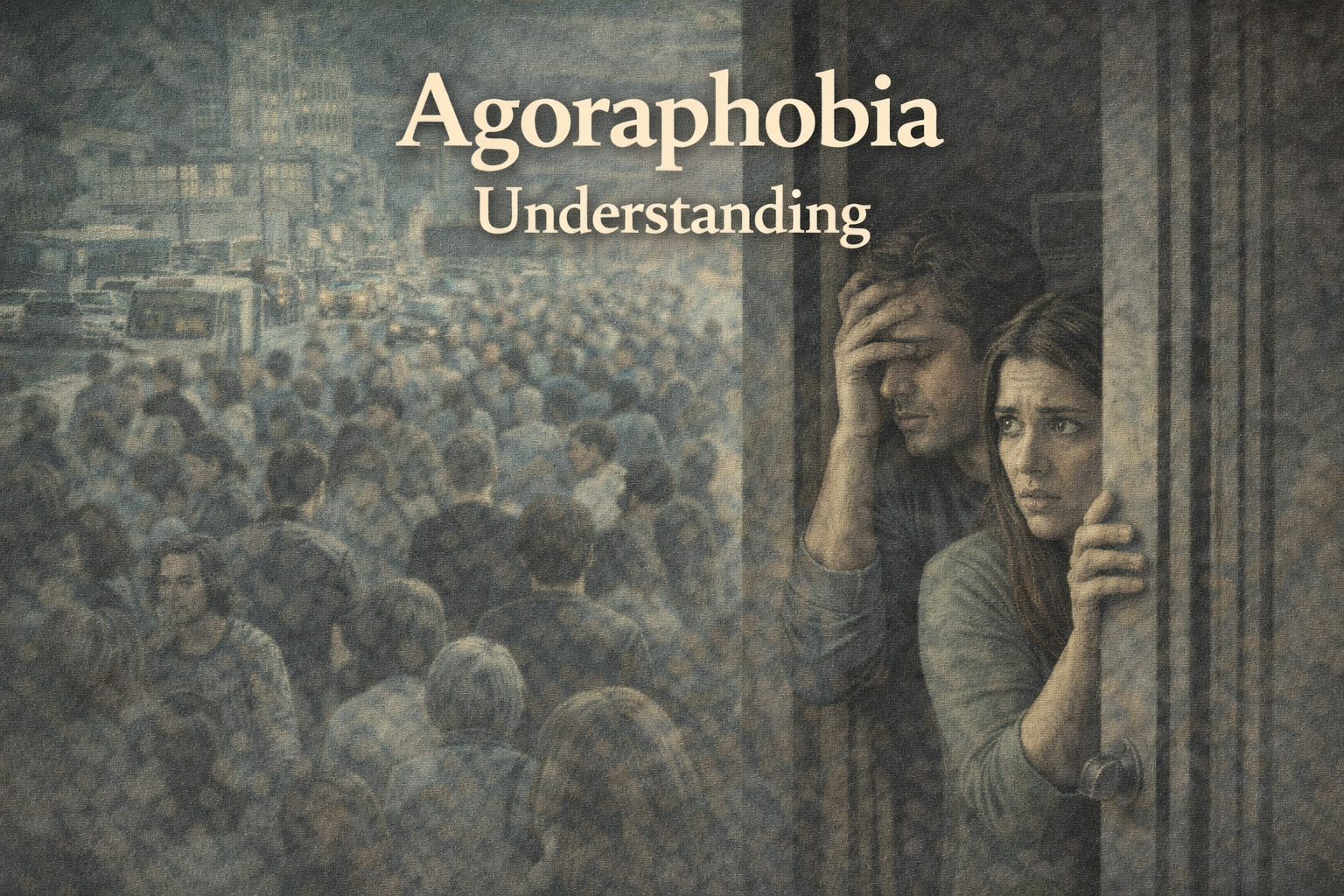
Imagine stepping out your front door only to be hit by a wave of overwhelming fear, your heart racing as if escape is impossible. This is the reality for many with agoraphobia, a condition that affects about 1.3% of U.S. adults over their lifetime, often leading to profound isolation and missed opportunities. If you’re experiencing intense anxiety in open spaces, crowds, or even public transportation, you might feel trapped in a cycle that disrupts your work, relationships, and daily joy.
The struggle with agoraphobia can make simple tasks feel insurmountable, fostering avoidance that shrinks your world and heightens risks like depression or substance use. But understanding agoraphobia is the first step toward reclaiming your life. In this article, you’ll gain insights into symptoms, causes, evidence-based treatments, and practical coping strategies to help you navigate recovery.
Drawing from trusted sources like the National Institute of Mental Health (NIMH) and Mayo Clinic, this guide offers medically accurate information to empower you. Remember, while knowledge is powerful, professional guidance is essential for personalized care.
What is Agoraphobia?
Agoraphobia is more than just fear of crowds—it’s an anxiety disorder where everyday situations trigger intense dread of being unable to escape or get help during a panic episode. Gaining agoraphobia understanding can demystify this condition, helping you recognize when avoidance behaviors start limiting your freedom. Often tied to panic disorder, it affects how you engage with the world, but with awareness, steps toward management become clearer.
Understanding Agoraphobia Disorder
People with agoraphobia experience marked fear in situations like being outside alone or in enclosed spaces, where they worry about panic symptoms escalating without support. This fear often stems from past panic attacks, leading to avoidance that restricts daily activities such as shopping or traveling. Research suggests it can occur independently, but it’s commonly linked to panic disorder, amplifying isolation over time.
Avoidance behaviors reinforce the cycle, making routine outings feel threatening. However, understanding agoraphobia as a treatable anxiety response—not a personal failing—opens doors to effective interventions. Healthcare experts emphasize that early recognition prevents long-term impacts on quality of life.
Agoraphobia vs Social Anxiety
While both involve avoidance, agoraphobia centers on fears of entrapment or helplessness during potential panic, rather than social scrutiny. For instance, someone with agoraphobia might dread a crowded mall due to escape challenges, whereas social anxiety focuses on embarrassment from interactions. Overlaps exist, especially if social judgment triggers panic, but the core fears differ significantly.
Distinguishing these helps tailor treatments—agoraphobia often requires exposure to physical spaces, while social anxiety targets interpersonal skills. According to experts, misdiagnosis can delay recovery, so consulting a professional ensures accurate identification.
Diagnosing Agoraphobia Criteria
Per DSM-5 criteria, diagnosis requires persistent fear in at least two situations, such as public transport or open areas, lasting six months or more and causing distress. Symptoms must not stem from substances or other medical conditions, and the anxiety must be disproportionate to actual danger. Clinicians assess through interviews, ruling out similar disorders.
This structured approach ensures reliable diagnosis, guiding targeted therapies. If symptoms interfere with life, seek evaluation promptly.
Pro Tip: Track your triggers in a journal for a week—note situations, physical sensations, and thoughts. This simple habit can reveal patterns, making discussions with your doctor more productive and accelerating your agoraphobia understanding.
For a broader foundation, see our guide on Signs of Mental Health Issues: Complete Guide to Anxiety Disorders
Why Understanding Agoraphobia Matters
Grasping agoraphobia understanding isn’t just academic—it’s a pathway to breaking free from its grip. This knowledge highlights how untreated fear can erode independence, yet also reveals high recovery potential with intervention. We’ll explore its real-world effects, stats, and why early action transforms lives.
Impact on Daily Life
Agoraphobia often leads to social withdrawal, job loss, or strained family ties as avoidance grows. Simple errands become ordeals, increasing risks of co-occurring depression or alcohol misuse. Over time, this isolation can worsen physical health, like reduced activity leading to weight gain.
However, recognizing these impacts motivates change. Many find that addressing it restores connections and productivity.
Prevalence and Statistics
In the U.S., about 0.9% of adults experience agoraphobia annually, with a 1.3% lifetime rate—higher among women. Onset typically occurs before age 35, affecting adolescents too at 2.4% lifetime prevalence. These figures underscore it’s common yet underreported.
Awareness of these stats normalizes seeking help, reducing stigma.
Benefits of Early Awareness
Spotting signs early enables prompt treatment, enhancing life quality and preventing chronic anxiety. Studies show timely therapy reduces complication risks, fostering resilience. You’re empowering yourself by learning now.
Signs of Agoraphobia in Adults
Recognizing signs of agoraphobia in adults is crucial for timely support. These indicators often blend emotional dread with physical reactions, evolving into avoidance that shrinks one’s world. Understanding them helps differentiate from everyday stress.
What is Agoraphobia Symptoms
Common symptoms include intense fear of leaving home alone, navigating crowds, or using public transport, prompting avoidance. You might plan routes meticulously or cancel plans, feeling trapped in “safe” zones. This fear disrupts routines, but it’s a signal for help.
Physical cues like sweating or trembling accompany the anxiety, mimicking panic attacks.
Agoraphobia Panic Attacks Help
During exposure, rapid heartbeat, shortness of breath, or dizziness can strike, feeling like choking or losing control. These episodes peak quickly but leave lasting dread. Grounding techniques, like focusing on senses, offer immediate relief.
Seeking professional agoraphobia panic attacks help prevents escalation.
Causes of Agoraphobia in Women
Women face higher prevalence due to genetic and hormonal influences, plus stressors like trauma or loss. Cultural expectations may amplify avoidance. Addressing these factors through therapy aids recovery.
Research Shows: A NIMH analysis found agoraphobia affects women at rates up to twice that of men, linked to biological and environmental factors.
For a broader foundation, see our guide on Signs of Mental Health Issues: Specific Phobias Explained
Agoraphobia Causes and Treatment
Exploring agoraphobia causes and treatment reveals a mix of biology and environment, with proven options for relief. This overview bridges understanding to action, emphasizing holistic approaches.
Agoraphobia Causes and Treatment
Causes include genetics, personality traits like neuroticism, and stressors such as trauma or panic history. Treatment often combines therapy and medication, targeting root fears. Early intervention curbs severity.
Agoraphobia Therapy Options
Cognitive behavioral therapy (CBT) and exposure therapy gradually confront fears, showing 60-70% symptom improvement in studies. SSRIs like sertraline manage symptoms alongside. Personalized plans yield best results.
Many find success with platforms like BetterHelp, offering accessible CBT sessions from home.
Agoraphobia Treatment at Home
At-home strategies include breathing exercises and self-guided exposure. Start small, like short walks, building confidence. Apps for mindfulness complement professional care.
Expert Insight: “Early intervention with CBT is key, as it rewires fear responses before avoidance becomes entrenched,” notes a clinical psychologist from Mayo Clinic.
How to Overcome Agoraphobia
Wondering how to overcome agoraphobia? It starts with structured steps, blending education and practice. This guide outlines practical paths, empowering gradual progress.
How to Overcome Agoraphobia
Begin by educating yourself on anxiety mastery—view panic as temporary. Then, practice exposure: list feared situations, tackle easiest first, noting successes. Consistency builds resilience.
Therapy accelerates this, with many achieving significant gains.
Agoraphobia Self Help Tips
Incorporate deep breathing (inhale 4, hold 7, exhale 8), mindfulness meditation, and positive affirmations like “This feeling will pass.” Build a support network—share goals with trusted friends.
Track progress in a journal for motivation.
Natural Remedies for Agoraphobia
Evidence suggests lavender or passion flower may ease anxiety, but research is limited. Exercise and chamomile tea promote relaxation; avoid caffeine. These complement, not replace, therapy—consult your doctor first.
Vitamin D and probiotics show promise for overall anxiety reduction.
Learn more breathing techniques in our how-to on breathing exercises.
Coping Strategies for Agoraphobia
Effective coping strategies for agoraphobia blend immediate tools with long-term habits. These approaches help manage moments of fear, fostering independence.
Coping Strategies for Agoraphobia
Practice slow breathing to halt panic escalation—inhale deeply through your nose, exhale via mouth. Progressive muscle relaxation, tensing then releasing groups, eases tension.
Incorporate daily walks to desensitize gradually.
Agoraphobia Support Groups Online
Joining online forums like ADAA groups provides shared stories and tips. Virtual meetings reduce isolation, offering empathy. Professional moderation ensures helpful guidance.
Best Practices and Expert Tips
Maintain consistency—set small weekly goals and track. Experts advise combining with therapy for optimal results. Celebrate wins to reinforce positive change.
Important: If symptoms include suicidal thoughts or severe interference, seek immediate professional help—call 988 for crisis support.
Scientific Evidence & Research
Delving into scientific evidence & research on agoraphobia validates treatments and informs choices. Studies highlight effective interventions, backed by data.
Clinical Studies
CBT with exposure therapy demonstrates 60-70% improvement in symptoms, often superior when combined with SSRIs. A 2020 pilot study on intensive online CBT showed large reductions in panic severity, maintained at follow-up.
Expert Opinions
Mayo Clinic experts stress early intervention prevents chronicity. NIMH links prevalence to panic history, advocating integrated care.
Statistical Data
Annual U.S. prevalence is 0.9%, higher in females; lifetime 1.3%. Adolescents face 2.4% lifetime risk.
For more, visit NIMH on agoraphobia; Mayo Clinic overview; JAMA Psychiatry study on CBT.
Common Mistakes to Avoid
Avoiding common pitfalls in managing agoraphobia accelerates recovery. These errors can prolong suffering, but better approaches exist.
Mistake #1: Complete Avoidance of Feared Situations
Why it’s problematic: It strengthens fear, deepening isolation and limiting growth. Better approach: Embrace gradual exposure with therapist guidance, starting minimally.
Mistake #2: Relying Solely on Medication Without Therapy
Why it’s problematic: Meds ease symptoms but skip skill-building for independence. Better approach: Pair SSRIs with CBT for lasting tools.
Mistake #3: Ignoring Co-occurring Conditions
Why it’s problematic: Untreated depression or substance issues worsen agoraphobia. Better approach: Pursue comprehensive screening and holistic treatment.
Frequently Asked Questions (FAQs)
What is Agoraphobia Symptoms?
Agoraphobia symptoms include intense fear of situations like crowds or open spaces, leading to avoidance behaviors. Physical signs often involve rapid heartbeat, sweating, and dizziness during exposure.
These stem from worries about panic without escape, disrupting daily life. Research suggests they persist for months, but therapy can manage them effectively—consult a professional if they interfere.
How to Overcome Agoraphobia?
To overcome agoraphobia, engage in CBT and exposure therapy, starting with small challenges. Build support and practice relaxation techniques.
Studies show 60-70% experience significant improvement with these methods. Meds may assist initially, but gradual facing fears is key. Work with a therapist for personalized progress.
Agoraphobia Causes and Treatment?
Causes of agoraphobia include genetics, stress, and panic history. Treatments involve CBT, exposure, and sometimes SSRIs.
Early intervention prevents escalation; combining approaches yields best results. Always discuss options with your doctor.
Signs of Agoraphobia in Adults?
Signs of agoraphobia in adults feature avoidance of leaving home or feared spaces, alongside anxiety and panic attacks. It’s more common in women, with symptoms lasting over six months.
Diagnosis requires professional assessment to rule out other issues.
Agoraphobia vs Social Anxiety?
Agoraphobia involves fear of entrapment during panic, while social anxiety centers on judgment in interactions. Both lead to avoidance, but agoraphobia ties more to physical escape concerns.
Treatments differ—exposure for agoraphobia, social skills for the other.
Natural Remedies for Agoraphobia?
Natural remedies for agoraphobia may include lavender or exercise to reduce anxiety, though evidence is limited. Avoid caffeine and try mindfulness.
These support but don’t replace therapy—consult experts for safe integration.
Agoraphobia Support Groups Online?
Agoraphobia support groups online, like those from ADAA, offer shared tips and community. They reduce isolation through virtual connections.
Conclusion
Gaining agoraphobia understanding equips you to reclaim freedom, diminishing isolation through proven strategies like CBT and exposure. You’ll now recognize symptoms early, apply coping tools, and avoid common pitfalls, paving the way for improved relationships and daily functioning. Effective treatments can transform overwhelming fear into manageable steps, enhancing overall well-being.
Take one actionable next step: Schedule a consultation with a mental health professional for tailored guidance. This empowers your journey toward overcoming agoraphobia.
Join a support group or explore therapy today—resources like NIMH await. Recovery from agoraphobia is achievable with persistence; you’re taking a brave step forward.
Medical Disclaimer:
This article is for informational and educational purposes only and does not constitute medical advice. The information provided should not be used for diagnosing or treating a health problem or disease. Always consult with a qualified healthcare professional before making any changes to your mental health treatment, starting new medications, or trying new supplements.
If you’re experiencing a mental health crisis, please call the 988 Suicide & Crisis Lifeline or visit your nearest emergency room. For non-emergency support, contact the Substance Abuse and Mental Health Services Administration (SAMHSA) National Helpline at 1-800-662-4357.
The content in this article is based on current research and expert consensus as of 2026, but medical knowledge evolves. Always verify information with your healthcare provider.