Over 40 million American adults live with anxiety disorders — yet many feel completely alone despite being surrounded by people. (NIMH data) Have people ever woken at 3 a.m. with racing thoughts, wishing there was someone who truly understood what they were going through — right then, without judgment or a waiting list?
High therapy costs, wait times that can stretch 3–6 months in many states, ongoing stigma, and geographic barriers leave millions without immediate, judgment-free support. For adults aged 25–55 balancing careers, families, and daily responsibilities, traditional in-person options often feel out of reach.
Pro Tip: Many people discover that sharing in a moderated online anxiety support group for just 15–20 minutes reduces the intensity of a panic wave faster than waiting for a therapist appointment.
For a broader foundation, see our guide on Signs of Mental Health Issues: What is Anxiety Disorder?
What Are Anxiety Online Communities?
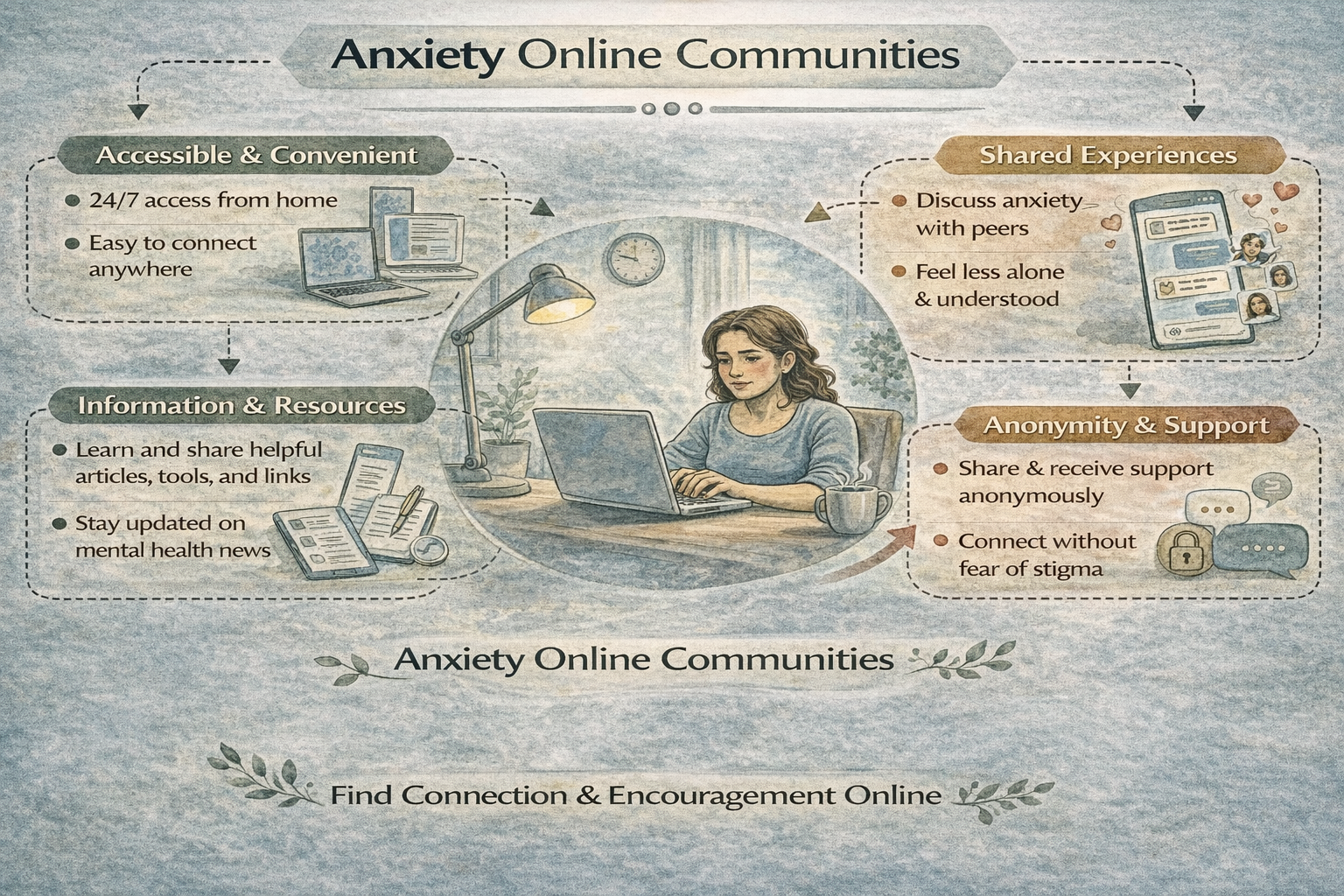
Anxiety online communities are 24/7 digital spaces where people with lived experience of anxiety connect for peer support. They include forums, chat rooms, video meetings, and discussion boards focused on empathy, shared strategies, and mutual encouragement rather than clinical treatment.
Definition and Core Features
These platforms operate around the clock and are usually moderated by trained peers or mental health professionals. Most offer free or low-cost access and emphasize real-life experiences over medical diagnosis. Core features typically include text chats, voice/video rooms, private messaging, and topic-specific threads.
How They Differ from Traditional Therapy
Anxiety online communities complement — but do not replace — professional therapy. Therapy provides structured clinical diagnosis and evidence-based interventions such as CBT. Online communities excel at delivering immediate emotional validation and practical tips from people who “get it.”
Evolution Since 2020
The post-pandemic surge dramatically increased demand for virtual anxiety support meetings. What began as temporary Zoom groups has evolved into sophisticated, moderated platforms with safety protocols and specialized rooms.
For a broader foundation, see our guide on Signs of Mental Health Issues: Complete Guide to Anxiety Disorders
Why Anxiety Online Communities Matter More Than Ever
For millions of US adults aged 25–55, anxiety online communities have become a lifeline in an increasingly isolated world.
Breaking Isolation for USA Adults 25-55
Remote and hybrid work — now standard for many — has heightened feelings of disconnection. Recent 2025 data show adults working remotely 3+ days per week report significantly higher loneliness than on-site workers.
Immediate Access vs Therapy Wait Times
While the average wait for in-person therapy can reach 67–94 days (and longer in some states), free online anxiety support groups are available instantly, 24 hours a day.
24/7 Availability for Panic Moments
Nighttime anxiety peaks when professional help is hardest to reach. A moderated anonymous anxiety chat room can provide real-time support exactly when needed most.
Key Benefits of Anxiety Online Communities
Research consistently shows meaningful benefits when people engage regularly with anxiety online communities.
Emotional Validation and Reduced Shame
Hearing “I felt exactly the same way” creates the powerful “someone finally gets it” effect that reduces shame faster than many expect.
Practical Coping Strategies from Peers
Members share real-world tools — breathing techniques during meetings, workplace scripts for social anxiety, or apps that actually helped during generalized anxiety flares — that therapists may not always cover in short sessions.
Long-Term Recovery Support
Ongoing participation builds accountability and relapse-prevention habits that support sustained recovery.
Research Shows: A 2025 digital peer support study found participants experienced 55–57% reductions in loneliness, sadness, and stress after engaging in chats.
For a broader foundation, see our guide on Signs of Mental Health Issues: Anxiety Support Groups
How to Choose the Best Anxiety Online Communities
Selecting the right platform makes all the difference for safety and effectiveness.
Safety and Moderation Red Flags
Look for HIPAA-level privacy protections, active professional moderation, and clear community guidelines. Avoid completely unmoderated public spaces like certain Reddit threads if consistent safety is needed.
Matching Your Specific Needs
Choose social anxiety online support group options if social situations trigger most, or generalized anxiety support online rooms if worry about everything keeps people up at night.
Free vs Paid Options
Many excellent free online anxiety support groups exist. Paid or premium tiers often add private coaching or smaller groups — weigh the value based on budget and needs.
Popular Types of Anxiety Online Communities & Forums
Diverse options exist to match every preference and need.
Free Online Anxiety Support Group Options
The ADAA offers excellent resources and connects users to vetted communities. Many independent moderated forums also provide completely free access with strong peer support.
Anonymous Anxiety Chat Room Platforms
Platforms like 7 Cups specialize in anonymous anxiety chat rooms with trained listeners available 24/7. Moderated Discord servers focused on anxiety also offer real-time voice and text options.
Social Anxiety Online Support Group Specialties
Niche groups exist for professionals, parents, or those with performance-related anxiety, creating highly relevant connections.
Generalized Anxiety Support Online Communities
Dedicated spaces for chronic worry, health anxiety, or daily management provide targeted strategies and understanding.
Important: Always verify current moderation policies before joining any new group.
How to Join an Anxiety Support Group Online Safely
Follow these four practical steps to protect well-being.
Step 1 – Verify Platform Credibility
Check for clear moderation policies, privacy statements, and user reviews from reputable sources.
Step 2 – Create Anonymous Profile
Use a pseudonym and avoid sharing identifiable details until feeling comfortable.
Step 3 – Start with Read-Only Mode
Lurk and observe for a few days to understand the community tone and rules.
Step 4 – Set Personal Boundaries
Decide in advance how much will be shared and when to step away if needed.
Scientific Evidence & Research on Anxiety Online Communities
Multiple studies confirm the value of peer support in digital spaces.
Clinical Studies
The 2022 HOPE randomized controlled trial demonstrated that a peer-led online intervention significantly increased help-seeking behavior for anxiety (odds ratio 10.27).
A 2025 digital peer support integration study reported 55–57% reductions in loneliness, sadness, and stress following regular chats.
Meta-Analyses
A 2023 meta-analysis in Psychiatric Services found peer support produced a small but significant reduction in anxiety symptoms (standardized mean difference = −0.21).
US Prevalence Context
According to NIMH data, 19.1% of U.S. adults experienced any anxiety disorder in the past year, with a lifetime prevalence of 31.1%.
NIMH Any Anxiety Disorder Statistics
PubMed – HOPE Online Peer Support RCT
Common Mistakes to Avoid When Using Anxiety Online Communities
Learning from others’ experiences helps get the most benefit safely.
Mistake #1: Oversharing Too Soon
Why it’s problematic: Early vulnerability without established trust can lead to regret. Better approach: Start by reading and offering light support before sharing deeply.
Mistake #2: Expecting Professional Therapy
Anxiety online communities are complementary, not a substitute. Use them alongside — not instead of — professional care when needed.
Mistake #3: Ignoring Red Flags in Unmoderated Spaces
Spot toxicity quickly (constant negativity, unsolicited advice that feels harmful) and leave immediately. Prioritize well-moderated environments.
Frequently Asked Questions (FAQs)
What are the best anxiety online communities in 2026?
The most effective options combine strong moderation, 24/7 availability, and focus on lived experience. Look for platforms with clear safety guidelines and positive user feedback. Many people find success starting with established moderated communities like 7 Cups or specialized anxiety forums.
Are free online anxiety support groups effective?
Yes, research suggests they can meaningfully reduce feelings of isolation and encourage help-seeking. A 2025 study showed significant drops in loneliness and stress after regular participation. Results vary by individual engagement and platform quality.
How do I join an anxiety support group online anonymously?
Choose a platform that allows pseudonyms, skip optional personal details, and begin in read-only mode. Most reputable communities make the process simple and private from the first click.
Is it safe to use anonymous anxiety chat rooms?
When the platform uses professional or trained moderation and strong privacy policies, yes. Always review community rules and report concerning behavior immediately.
Can anxiety online communities replace therapy?
No. They provide excellent peer support and practical tips but cannot diagnose or deliver clinical treatment. Use them as a valuable complement to professional care, especially if symptoms interfere with daily life.
What is the difference between a social anxiety online support group and generalized anxiety support online?
Social anxiety groups focus on fears around social situations, performance, or interactions. Generalized anxiety support addresses persistent worry about multiple life areas. Choose based on primary triggers.
How long should I participate in an online anxiety help forum free?
There is no fixed timeline — many benefit from ongoing involvement for months or years. Start with 2–3 weeks of consistent, low-pressure participation and adjust based on how supported it feels.
Conclusion
Anxiety online communities offer immediate, empathetic, research-supported connection that reduces isolation and can accelerate recovery when used thoughtfully alongside professional care.
What these communities are, why they matter, how to choose and join safely, and the evidence behind their benefits is now clear. The first supportive conversation really is one click away.
The hardest step has already been taken by reading this far. The community is waiting to welcome anyone — no judgment, just real people who understand. No one is alone, and brighter days with real connection are possible.
Medical Disclaimer
This article is for informational and educational purposes only and does not constitute medical advice. Always consult a qualified healthcare professional for personalized care. In crisis, call or text 988 immediately.