Did you know that anxiety disorders affect 19.1% of U.S. adults annually, making it one of the most common mental health challenges? If you’re among the millions of Americans aged 25-55 experiencing racing thoughts, restlessness, or overwhelming worry, you understand how it can disrupt work, relationships, and daily life, often leading to isolation and reduced quality of life.
Many people feel stuck, unsure where to turn for relief without relying solely on medication or therapy. That’s where anxiety self-help strategies come in—they offer practical, accessible tools to manage symptoms and build resilience right from home.
For a broader foundation, see our guide on Signs of Mental Health Issues: Generalized Anxiety Disorder (GAD)
What Are Anxiety Self-Help Strategies?
Anxiety self-help strategies are personal techniques you can use to manage anxiety symptoms without immediate professional intervention. They empower you to take an active role in your mental health, focusing on long-term coping and prevention. Research suggests these approaches can significantly reduce anxiety when practiced consistently, complementing any ongoing treatment.
Overview of Self-Help Approaches for Anxiety
Self-help involves a range of methods that target the mind, body, and lifestyle. These include cognitive techniques to reframe thoughts, physical exercises to release tension, and daily habits to build resilience. Backed by research from organizations like the ADAA, anxiety self-help strategies emphasize empowerment, helping you feel more in control amid uncertainty.
For instance, if you’re dealing with persistent worry, self-help might start with simple journaling to track patterns. This approach fosters self-awareness and long-term coping skills.
Types of Anxiety Self-Help Strategies
Behavioral strategies, such as gradual exposure to fears or habit formation, help break anxiety cycles. Mind-body practices like yoga and meditation connect physical relaxation with mental calm. Daily routines, including consistent sleep and exercise, prevent anxiety buildup.
Each type addresses different aspects of anxiety, making them versatile for various situations.
When to Start Implementing Them
Begin at early signs of anxiety, like increased heart rate or irritability, to prevent escalation. They’re also ideal as complementary tools alongside therapy. If symptoms persist or interfere with daily life, consult a healthcare professional promptly.
Pro Tip:
Start small by choosing one anxiety self-help strategy that fits your routine, like a 5-minute breathing session each morning. Consistency builds momentum, and many people notice subtle improvements within a week.
For a broader foundation, see our guide on Signs of Mental Health Issues: Complete Guide to Anxiety Disorders
Why Do Anxiety Self-Help Strategies Matter?
Anxiety self-help strategies play a crucial role in mental health management, offering tools that go beyond temporary fixes. They matter because they promote independence while addressing the root causes of anxiety, leading to lasting improvements in well-being.
Benefits for Mental Health
These strategies reduce symptoms by triggering endorphin release, which naturally elevates mood. They also build resilience against stressors, helping you bounce back faster from challenging situations.
Impact on Daily Life
By managing anxiety, you enhance productivity at work and strengthen relationships with loved ones. Furthermore, they lower the risk of developing chronic conditions like depression, creating a ripple effect of positive change.
Long-Term Advantages
Over time, anxiety self-help strategies foster self-awareness and emotional independence. They’re cost-effective and accessible, making them a sustainable option for ongoing mental health support.
For a broader foundation, see our guide on Signs of Mental Health Issues: Anxiety Therapy Types
How to Use Breathing Exercises for Anxiety
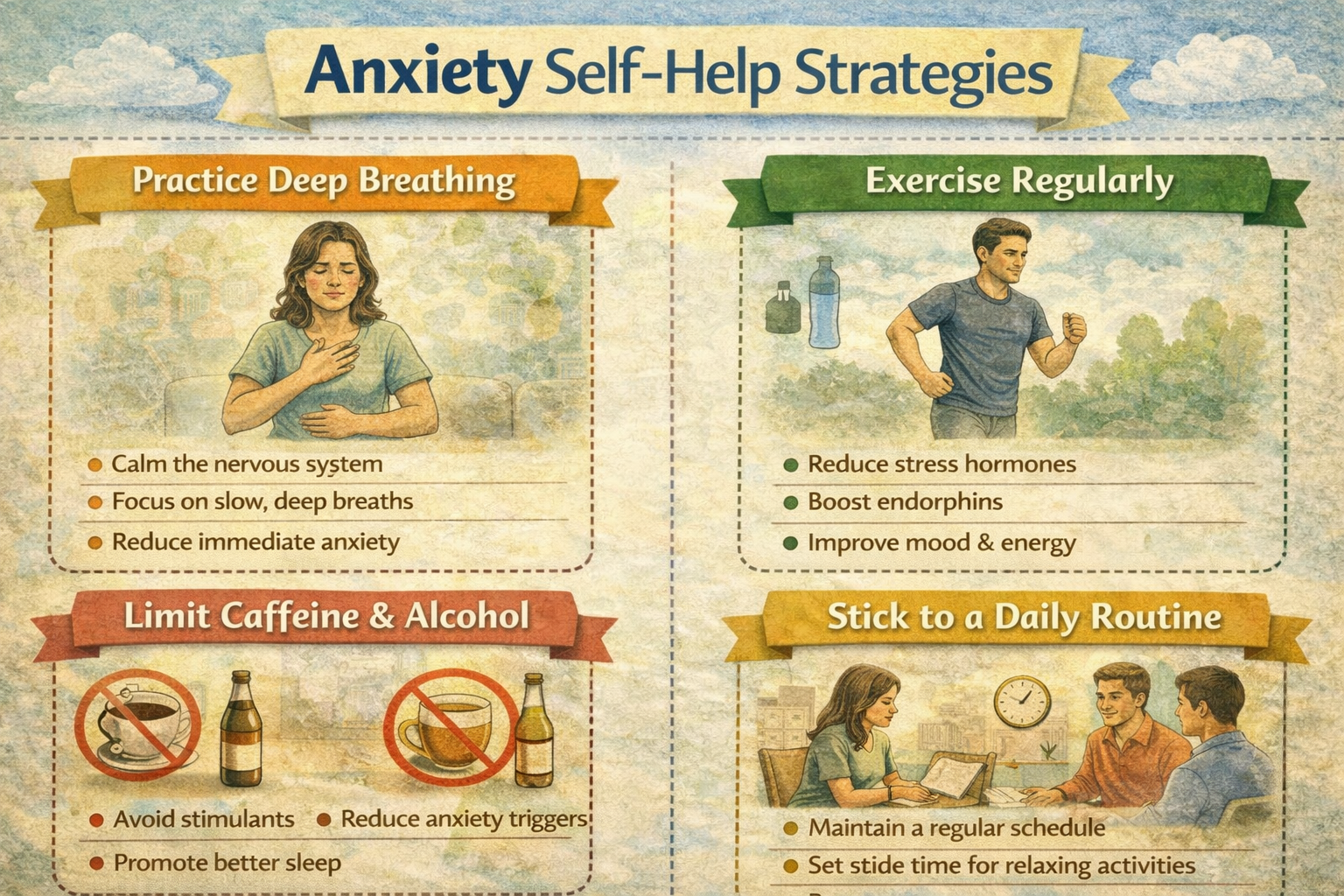
Breathing exercises for anxiety are simple yet powerful anxiety self-help strategies that can provide immediate relief. They work by activating the body’s relaxation response, slowing your heart rate and calming your mind. Here’s how to incorporate them effectively.
Simple Breathing Techniques
Try the 4-7-8 breathing method: Inhale quietly through your nose for 4 seconds, hold your breath for 7 seconds, and exhale completely through your mouth for 8 seconds. This technique, developed by Dr. Andrew Weil, helps regulate your nervous system.
Diaphragmatic breathing, or belly breathing, involves placing one hand on your abdomen and inhaling deeply so your belly rises. This promotes calm by engaging the diaphragm fully.
When to Practice
Use these during high-stress moments, like before a meeting, or integrate them into daily routines, such as morning or bedtime rituals. Regular practice makes them more instinctive over time.
Tips for Effectiveness
Combine breathing with visualization, imagining stress leaving your body with each exhale. Track your progress in a journal to note how often you use them and any reductions in anxiety.
Mindfulness for Anxiety Relief
Mindfulness for anxiety relief is a cornerstone of anxiety self-help strategies, helping you stay present and reduce overthinking. It involves paying attention to the moment without judgment, which research shows can lower anxiety levels significantly.
Basic Mindfulness Exercises
Start with body scan meditation: Lie down and mentally scan your body from toes to head, noting and releasing tension. Mindful walking or eating encourages focusing on sensations, diverting from anxious thoughts.
Integrating into Daily Routine
Begin with just 5 minutes daily, perhaps during your commute or while preparing meals. Gradually increase as it becomes a habit.
Overcoming Common Challenges
If your mind wanders, gently redirect it without self-criticism. This builds patience and makes mindfulness more accessible.
Natural Remedies for Anxiety
Natural remedies for anxiety offer gentle, home-based options as part of anxiety self-help strategies. They focus on herbs, diet, and lifestyle tweaks that may ease symptoms, but always check with your doctor first.
Herbal and Dietary Options
Chamomile tea has calming properties, supported by studies showing it reduces generalized anxiety. Omega-3 rich foods, like salmon or walnuts, support brain health and may lessen anxiety.
Lifestyle Adjustments
Prioritize regular sleep—aim for 7-9 hours nightly—and stay hydrated, as dehydration can mimic anxiety symptoms. These changes create a stable foundation for mental well-being.
Safety Considerations
Consult your doctor before trying supplements, especially if you’re on medication, to avoid interactions. Start with small doses and monitor effects.
Research Shows:
A 2019 study in Phytotherapy Research found that chamomile extract reduced moderate to severe generalized anxiety disorder symptoms by 50% in participants over 8 weeks.
How to Stop Anxiety Attacks
Learning how to stop anxiety attacks is a vital anxiety self-help strategy, providing tools for immediate intervention. These techniques interrupt the panic cycle and restore calm.
Immediate Response Techniques
Use grounding with the 5-4-3-2-1 sensory method: Name 5 things you see, 4 you can touch, 3 you hear, 2 you smell, and 1 you taste. This anchors you in the present.
Preventive Measures
Identify triggers in advance, such as caffeine or crowded spaces, and prepare coping plans. Journaling helps spot patterns.
Post-Attack Recovery
Reflect in a journal about what happened and what worked. This builds confidence for future episodes.
Coping Strategies for Anxiety
Coping strategies for anxiety form the backbone of effective self-help, offering practical ways to handle daily stressors. They blend immediate relief with long-term habits.
Daily Coping Tools
Progressive muscle relaxation involves tensing and releasing muscle groups sequentially, reducing physical tension linked to anxiety.
Social Support Integration
Talk to trusted friends or join support groups; sharing experiences normalizes feelings and provides perspective.
Long-Term Habits
Engage in regular exercise and hobbies, like reading or gardening, to build emotional buffers against anxiety.
Expert Insight:
As a mental health expert might note, “Coping strategies work best when personalized—experiment to find what resonates with you, and remember consistency is key to rewiring your response to stress.”
Best Practices and Expert Tips for Anxiety Self-Help Strategies
To maximize anxiety self-help strategies, follow best practices drawn from expert recommendations. Consistency and personalization are essential for real results.
Expert-Recommended Practices
Mayo Clinic advice emphasizes routine: Practice techniques daily, even on calm days, to strengthen their impact. Combine methods, like pairing breathing with journaling.
Advanced Tips
Use cognitive reframing to challenge anxious thoughts—question “Is this worry realistic?” This shifts perspectives effectively.
Monitoring Progress
Track with apps like Calm or a simple journal. Note anxiety levels before and after strategies to adjust as needed.
Scientific Evidence & Research
Scientific evidence supports many anxiety self-help strategies, showing they can be as effective as therapy for mild cases. Let’s explore key findings.
Clinical Studies
Cochrane reviews indicate mindfulness and relaxation techniques reduce anxiety symptoms by 20-30% in controlled trials. A Delphi consensus among experts identifies breathing and grounding as particularly helpful for sub-threshold anxiety, preventing full disorders.
Expert Opinions
ADAA experts recommend exercise and meditation for their endorphin-boosting effects, which naturally counter stress hormones. They stress integrating these into daily life for sustained benefits.
Statistical Data
Studies from the National Institutes of Health show meditation lowers blood pressure and anxiety; self-help approaches improve mood in 40-60% of users. A 2023 meta-analysis in JAMA Psychiatry found regular self-help practices comparable to low-dose medication for generalized anxiety.
External Links: NIH Anxiety Overview; ADAA Self-Help Resources; Cochrane Review on Mindfulness
Important:
While research is promising, self-help isn’t suitable for severe anxiety. If symptoms include panic attacks or suicidal thoughts, seek professional help immediately.
Common Mistakes to Avoid
Avoiding common pitfalls in anxiety self-help strategies ensures better outcomes. Here’s what to watch for.
Mistake #1: Avoiding Triggers
This reinforces the fear cycle, making anxiety worse over time. A better approach is gradual exposure, starting small to build tolerance.
Mistake #2: Beating Yourself Up
Self-criticism increases anxiety by adding guilt. Practice self-compassion instead, treating yourself as you would a friend.
Mistake #3: Over-Relying on Quick Fixes
This ignores root causes, leading to temporary relief. Build sustainable habits like daily mindfulness for lasting change.
Frequently Asked Questions (FAQs)
What Are Effective Ways to Manage Anxiety Naturally?
Natural methods include breathing exercises, mindfulness, and exercise. These can reduce symptoms by promoting relaxation and endorphins.
Start with daily deep breathing for quick relief, supported by studies showing reduced anxiety levels. Combine with a balanced diet for best results. If natural approaches aren’t enough, consult a professional.
How to Calm Anxiety Fast?
Use the 4-7-8 breathing technique or grounding exercises. Inhale for 4 seconds, hold for 7, exhale for 8 to activate the parasympathetic system, calming the body within minutes.
These methods shift focus from panic to the present. Practice regularly to make them second nature. For frequent episodes, speak with a healthcare provider.
What Are Home Remedies for Anxiety?
Try chamomile tea, journaling, or progressive muscle relaxation. These home-based remedies help by soothing the nervous system and processing thoughts, as per expert recommendations.
Incorporate them into your routine for cumulative benefits. They’re safe for most, but check with your doctor if you have underlying conditions.
Can Self Help for Social Anxiety Work?
Yes, techniques like positive self-talk and gradual exposure can build confidence. Combine with mindfulness to manage thoughts, effective for many as per clinical reviews.
Start in low-stakes situations, like smiling at a stranger. Progress may take weeks, but persistence pays off. Professional therapy can enhance results.
What Techniques Control Anxiety Thoughts?
Cognitive reframing and meditation redirect negative thoughts. Practice daily to rewire patterns, backed by evidence from anxiety management studies.
Identify distortions like “all-or-nothing” thinking and challenge them. This reduces rumination over time. If thoughts are intrusive, seek expert guidance.
How to Reduce Anxiety Quickly?
Engage in physical activity or sensory grounding. A short walk or 5-4-3-2-1 method shifts focus, providing rapid relief as suggested by mental health experts.
These interrupt the anxiety loop effectively. Follow up with relaxation to prevent rebound. Persistent anxiety warrants medical evaluation.
Are Daily Exercises for Anxiety Helpful?
Yes, routines like yoga or walking release endorphins and lower stress hormones. Aim for 30 minutes daily for sustained benefits, according to ADAA guidelines.
They improve overall mood and sleep too. Start gently if you’re new to exercise. Consult a doctor before starting if you have health concerns.
Conclusion
Anxiety self-help strategies empower you to manage symptoms naturally, transforming overwhelming worry into manageable moments and fostering long-term mental health. From breathing exercises that calm you fast to mindfulness that builds inner peace, these accessible techniques offer relief without relying solely on medication, enhancing your daily life and relationships.
The real value lies in their practicality—you can start today and see gradual changes that add up to significant improvements. Restate primary value proposition: These tools put control back in your hands, backed by science and expert insights.
Incorporate one strategy today, like a breathing exercise during your next stressful moment. Consult a professional for persistent symptoms, and sign up for our mental health newsletter for more tips.
Medical Disclaimer
This article is for informational purposes only and is not a substitute for professional medical advice, diagnosis, or treatment. Always seek the advice of your physician or other qualified health provider with any questions you may have regarding a medical condition.
If you’re experiencing a mental health crisis, please call the 988 Suicide & Crisis Lifeline or visit your nearest emergency room. For non-emergency support, contact the Substance Abuse and Mental Health Services Administration (SAMHSA) National Helpline at 1-800-662-4357.
The content in this article is based on current research and expert consensus as of 2026, but medical knowledge evolves. Always verify information with your healthcare provider.