Did you know that during August 2021–August 2023, the prevalence of depression in the past 2 weeks was 13.1% among adolescents and adults aged 12 and older in the United States, with higher rates among females and younger age groups? This statistic from the CDC highlights how widespread this mental health challenge has become, affecting millions and often leading to feelings of hopelessness, fatigue, and disrupted daily life. Living with depression can feel overwhelming, impacting your relationships, work, and overall well-being, making even simple tasks seem insurmountable. Many people struggle in silence, unsure where to turn for relief beyond medication or therapy.
This article explores practical depression lifestyle changes that may help alleviate symptoms and support mental health. You’ll learn about evidence-based strategies like exercise routines, diet tips, sleep habits, and stress management techniques that complement professional care. These adjustments can empower you to take an active role in your recovery, potentially reducing symptom severity and building resilience. Based on research from authoritative sources like the NIH, Mayo Clinic, and Harvard Health, these approaches are designed to be accessible and sustainable for adults aged 25-55 seeking natural ways to manage depression. Remember, while these changes show promise, they’re most effective when combined with guidance from a healthcare provider.
For related reading, see our guide on Signs of Mental Health Issues: Persistent Depressive Disorder Overview
What Are Depression Lifestyle Changes?
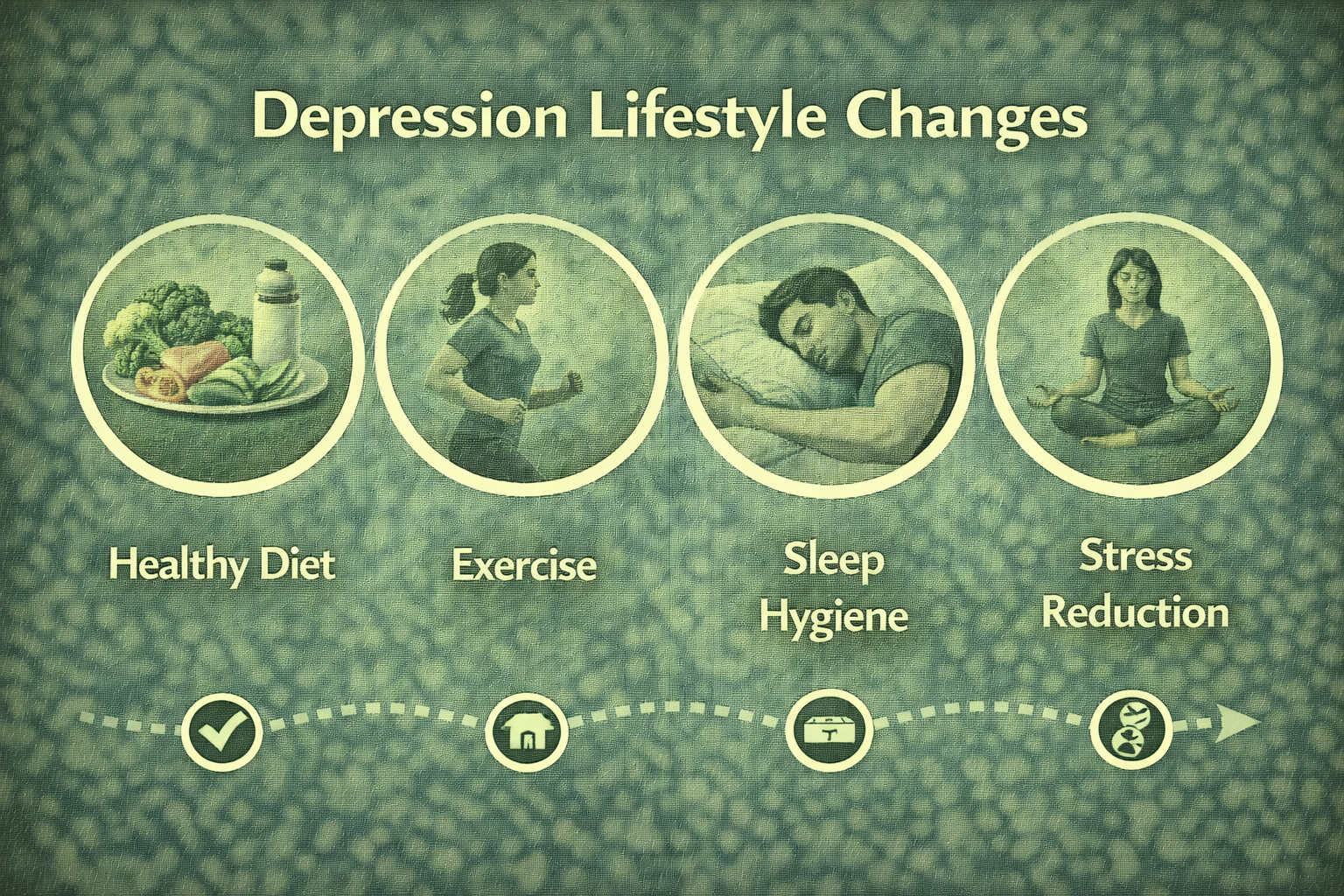
Depression lifestyle changes refer to intentional adjustments in daily habits that support mental health and may help reduce depressive symptoms. These non-pharmacological strategies focus on areas like physical activity, nutrition, sleep, and stress reduction, which can influence brain chemistry and overall well-being. Research suggests that incorporating such changes can complement traditional treatments, potentially leading to better outcomes for those managing depression. However, they’re not a standalone cure and should be discussed with a professional.
Overview of Lifestyle Modifications to Ease Depression
Lifestyle changes involve daily adjustments in habits like physical activity, nutrition, and rest to support mental health. For instance, shifting from sedentary routines to more active ones can promote neuroplasticity, helping the brain adapt and recover. These are non-pharmacological approaches that can complement therapy or medication, offering a holistic way to address symptoms.
Backed by NIH research showing benefits in reducing depressive symptoms, these modifications emphasize consistency over perfection. Studies indicate that multifaceted interventions, including diet and exercise, may lower symptom severity by addressing inflammation and hormone imbalances.
Ways to Improve Mood Through Lifestyle
Incorporating routines that promote endorphin release and reduce inflammation can enhance mood stability. For example, combining balanced meals with moderate movement helps regulate serotonin levels, a key neurotransmitter affected in depression.
Examples include balanced diets rich in whole foods and regular movement like walking, which research links to improved emotional regulation.
Holistic Approaches to Depression
Mind-body practices like mindfulness address emotional and physical aspects of depression. Techniques such as meditation can help reframe negative thoughts, fostering a sense of calm.
NCCIH evidence supports yoga and meditation for symptom relief, with studies showing modest reductions in depressive episodes when practiced regularly.
Research Shows: A systematic review by NCCIH found that yoga may help reduce depressive symptoms, with participants reporting improved mood after consistent practice.
For a broader foundation, see our guide on Signs of Mental Health Issues: Ultimate Guide to Understanding Depression
Why Do Lifestyle Changes Matter for Depression?
Lifestyle changes play a crucial role in managing depression by targeting underlying factors that exacerbate symptoms. They can enhance brain function, reduce inflammation, and improve resilience, making them a valuable addition to treatment plans. Understanding their importance empowers you to make informed choices for long-term mental health.
Benefits of Natural Lifestyle Changes for Depression
Natural lifestyle changes reduce risk by addressing factors like inflammation and stress response. Harvard Health notes that healthy habits can lower depression vulnerability through better physiological balance.
Building Resilience with Lifestyle Changes
These adjustments enhance brain function, improve mood stability, and prevent relapse. Consistent practices build emotional strength, helping you navigate challenges more effectively.
Nutrition and Depression Management
Diets rich in omega-3s and antioxidants lower depression risk by 25-35%. Studies show that nutrient-dense foods support neurotransmitter production, aiding symptom management.
How Can Exercise Routines Provide Depression Relief?
Exercise can be a powerful tool for depression relief, as it stimulates the release of mood-boosting chemicals in the brain. Starting small and building gradually makes it approachable, even when motivation is low. Consult your doctor before beginning any new routine.
Physical Activity for Depression Treatment
Aerobic exercises like walking release endorphins; Mayo Clinic studies show effects comparable to antidepressants for mild to moderate cases.
Exercise Routines for Depression Relief
Start with 30 minutes daily; include yoga or strength training. A meta-analysis highlights walking, jogging, and yoga as particularly effective.
- Aim for 150 minutes of moderate activity weekly.
- Try brisk walks or home yoga sessions.
Best Practices for Getting Started
Set realistic goals, track progress, combine with social activities. Begin with short sessions to avoid overwhelm.
Expert Insight: As a mental health specialist might note, “Consistency in exercise builds momentum, turning initial effort into lasting habit for mood improvement.”
For a broader foundation, see our guide on Signs of Mental Health Issues: Depression Medication Overview
Diet Tips for Overcoming Depression
Your diet influences brain health, and making thoughtful choices may help manage depression symptoms. Focus on whole foods while limiting processed items for optimal benefits. Always pair dietary changes with professional advice.
Healthy Habits to Fight Depression Through Nutrition
Mediterranean diet reduces risk; avoid ultra-processed foods. Harvard studies link it to lower depression incidence.
How to Manage Depression Naturally with Food
Increase fruits, veggies, fish; limit sugars and refined grains. Omega-3-rich foods support brain function.
Comparison of Beneficial vs. Harmful Foods
| Beneficial Foods | Harmful Foods |
| Omega-3 rich fish (e.g., salmon) | Sugary drinks |
| Leafy greens | Processed meats |
| Nuts and seeds | Refined carbs |
Sleep Habits to Reduce Depression
Quality sleep is foundational for mood regulation, and poor habits can worsen depression. Prioritizing rest may help stabilize emotions. Track your patterns and seek help if insomnia persists.
Improving Sleep Habits to Reduce Depression
Aim for 7-9 hours; inadequate sleep doubles depression risk. CDC data links short sleep to higher mental distress.
Daily Routines for Mental Health and Better Sleep
Consistent bedtime, limit screens, create a relaxing environment. Wind down with reading or light stretching.
Linking Sleep and Mood Improvement
Better sleep regulates emotions and reduces symptoms. Studies show insufficient sleep correlates with depressive episodes.
Important: If sleep issues persist, consult a healthcare provider, as they may indicate underlying conditions.
Stress Management for Depression
Managing stress effectively can lessen depression’s grip by lowering cortisol levels. Simple techniques integrated daily offer relief. Start with what feels manageable.
Stress Management for Depression Techniques
Relaxation like deep breathing; APA recommends for symptom reduction.
Lifestyle Changes for Depression and Stress
Mindfulness meditation, time management, social support. These build coping skills.
Expert Tips for Daily Integration
Journaling, hobbies, professional guidance if needed. Practice gratitude to shift focus.
Pro Tip: Try the 4-7-8 breathing technique: Inhale for 4 seconds, hold for 7, exhale for 8—to quickly calm racing thoughts.
Natural Lifestyle Changes for Depression
Natural approaches emphasize harmony between body and mind, potentially easing symptoms. Use them as adjuncts to conventional care.
Holistic Approaches to Depression
Acupuncture, music therapy show modest benefits. NCCIH reviews indicate short-term relief.
How to Manage Depression Naturally
Herbal supplements like SAMe (with caution), nature exposure. Consult a doctor before starting.
Integrating Mind-Body Practices
Yoga and tai chi for combined physical and mental benefits. Evidence supports their role in symptom reduction.
Healthy Habits to Fight Depression
Building healthy habits creates a foundation for sustained mental health. Small, consistent actions yield big results over time.
Daily Routines for Mental Health
Morning routines, hydration, social connections. These foster structure and positivity.
Building Resilience with Lifestyle Changes
Goal-setting, gratitude practices, avoiding substances. These enhance emotional durability.
Long-Term Strategies
Track habits, adjust as needed, seek community support. Regular check-ins prevent setbacks.
Scientific Evidence & Research
Research underscores the value of lifestyle changes in depression management. Multiple studies affirm their efficacy as complementary strategies.
Clinical Studies
NIH reviews show lifestyle interventions reduce symptoms; exercise meta-analyses confirm efficacy comparable to therapy. Mayo Clinic findings highlight exercise’s antidepressant-like effects.
Expert Opinions
Harvard Health emphasizes diet’s role in lowering depression risk by 25-35%. Experts advocate for integrated approaches.
Statistical Data
13.1% U.S. prevalence (CDC); inadequate sleep linked to 2.5x higher distress.
Common Mistakes to Avoid
Avoiding common pitfalls ensures lifestyle changes are effective and sustainable. Awareness helps you stay on track.
Mistake #1: Ignoring Sleep Patterns
Why it’s problematic: Leads to worsened symptoms; CDC links inadequate sleep to higher depression. Better approach: Establish consistent routines, aiming for 7-9 hours.
Mistake #2: Relying on Unhealthy Diets
Why it’s problematic: Ultra-processed foods increase risk. Harvard notes poor nutrition exacerbates symptoms. Better approach: Focus on whole foods like fruits and fish.
Mistake #3: Skipping Exercise
Why it’s problematic: Misses endorphin benefits. Mayo Clinic warns of lost opportunities for relief. Better approach: Start small and build consistency, even with short walks.
Frequently Asked Questions (FAQs)
What are effective lifestyle changes for depression?
Effective changes include regular exercise, balanced diet, quality sleep, and stress management. Research shows these reduce symptoms by addressing inflammation and boosting mood chemicals. Start with 30 minutes of activity daily and consult a professional. Additionally, tracking progress can help sustain motivation, but they’re best as part of a comprehensive plan.
How to manage depression naturally?
Incorporate mindfulness, yoga, and natural supplements like omega-3s. NIH evidence supports these as adjuncts, but they’re not replacements for therapy. Track progress and seek medical advice. Always monitor for interactions and prioritize evidence-based options.
What exercise routines provide depression relief?
Aerobic activities like walking or jogging, 150 minutes weekly. Mayo Clinic studies indicate they ease symptoms similar to meds. Combine with strength training for best results. Begin gradually to avoid burnout, and pair with enjoyable activities.
Are there diet tips for overcoming depression?
Follow a Mediterranean diet: fruits, veggies, fish. Harvard research links it to 25-35% lower risk. Avoid sugars and processed foods. Incorporate omega-3 sources daily, and experiment with meal prep for consistency.
How do sleep habits reduce depression?
Aim for 7-9 hours; CDC data shows poor sleep increases risk 2.5x. Maintain routines to regulate mood. Create a wind-down ritual, and address insomnia early with professional help if needed.
What stress management helps with depression?
Techniques like meditation and deep breathing. APA recommends for symptom control; integrate daily for resilience. Build a support network and practice self-compassion to enhance effectiveness.
Conclusion
These depression lifestyle changes empower you to take control, reducing symptoms through evidence-based habits like exercise and diet. By incorporating routines that boost endorphins, regulate sleep, and manage stress, you can foster greater mood stability and resilience. Small, consistent adjustments can significantly improve your daily life, helping you feel more energized and hopeful.
As a clear next action step, track your habits for a week—note sleep, meals, and activity—and observe any mood shifts. For personalized guidance, consult a healthcare professional to ensure these changes align with your needs. You’re not alone; positive change is possible with these steps, and seeking support is a strength.
Medical Disclaimer:
This article is for informational purposes only and not a substitute for professional medical advice. Consult a healthcare provider for diagnosis and treatment. If experiencing a crisis, call the 988 Suicide & Crisis Lifeline or seek emergency help. Content based on 2026 research, but verify with your provider.